


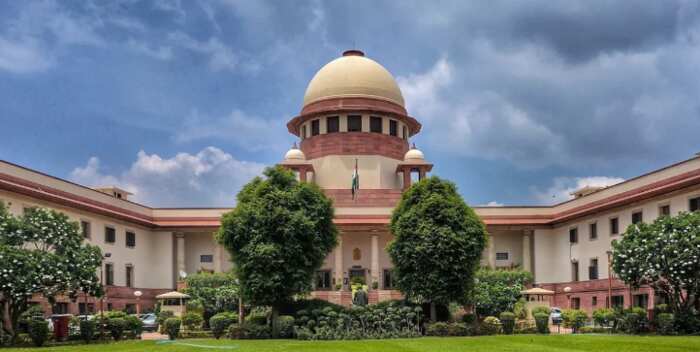
Case Citation and Basic Information
Title: Pooja Ramesh Singh v. Jammu & Kashmir Bank Ltd. & Anr.
Citation: 2026 INSC 668
Court: Supreme Court of India
Date of Judgment: 2 July 2026
Bench: Justice Pamidighantam Sri Narasimha and Justice Alok Aradhe (Live Law)
Introduction
The decision in Pooja Ramesh Singh v. Jammu & Kashmir Bank Ltd. & Anr. (2026) marks a significant development in Indian jurisprudence concerning the use of Artificial Intelligence in judicial proceedings. The Supreme Court addressed an unprecedented issue: whether judicial decisions based on AI-generated fictitious precedents can withstand judicial scrutiny. The judgment goes beyond correcting an individual error and establishes foundational principles regarding the responsible integration of AI within the justice delivery system.
The Court acknowledged the transformative potential of Artificial Intelligence in legal research and adjudication while simultaneously emphasizing that judicial authority cannot be delegated to technology. Human verification, judicial reasoning, and accountability remain indispensable components of the judicial process. (Live Law)
Facts of the Case
The dispute originated before the National Company Law Tribunal (NCLT), where the Tribunal relied upon several judicial precedents while deciding issues arising under the Insolvency and Bankruptcy Code.
During appellate proceedings, it was discovered that multiple authorities cited in the Tribunal’s judgment either never existed or contained paragraphs that had been entirely fabricated by an Artificial Intelligence tool. These hallucinated authorities had subsequently influenced the reasoning adopted by the National Company Law Appellate Tribunal (NCLAT).
The appellant challenged the validity of these decisions before the Supreme Court, arguing that judgments founded upon non-existent precedents violated the rule of law and rendered the adjudicatory process fundamentally defective. (Live Law)
Issues Before the Court
The Supreme Court considered the following principal questions:
- Whether judicial decisions relying upon AI-generated fake precedents can be sustained in law.
- Whether reliance on fabricated authorities vitiates the entire adjudicatory process.
- What safeguards should be adopted to regulate the use of Artificial Intelligence in judicial proceedings.
- What responsibilities do judges and advocates bear while using AI-assisted legal research? (Supreme Court of India)
Judgment
The Supreme Court allowed the appeal and set aside both the NCLT and NCLAT judgments.
The Court held that a judicial decision based upon fake or hallucinated legal authorities cannot be regarded as a valid exercise of judicial power. Even if fabricated authorities do not independently determine the outcome, their presence contaminates the judicial reasoning and undermines the legitimacy of the decision.
The Court clarified that Artificial Intelligence should function only as an assistive technological tool. Judicial reasoning, interpretation of law, appreciation of evidence, and final decision-making must always remain under direct human supervision.
The Court further directed that members of the legal profession must verify every authority generated through AI before relying upon it in court proceedings. (Live Law)
Ratio Decidendi
The ratio of the judgment may be summarised as follows:
- Judicial decisions founded upon fictitious or AI-generated hallucinated precedents are legally unsustainable.
- Authenticity of legal authorities is an essential requirement of the judicial process.
- Artificial Intelligence cannot replace judicial application of mind.
- Human oversight remains mandatory in every stage of adjudication.
- Courts must adopt a zero-tolerance approach towards fabricated legal authorities. (Law Web)
Critical Analysis
The judgment represents one of the earliest comprehensive judicial responses to the challenges posed by generative Artificial Intelligence in litigation.
One of its greatest strengths lies in balancing technological innovation with judicial integrity. Rather than rejecting AI altogether, the Court recognised its enormous utility in legal research, document analysis, and administrative efficiency. At the same time, it firmly rejected blind reliance on AI-generated outputs.
The judgment also reinforces professional ethics. Lawyers cannot evade responsibility by attributing mistakes to AI software. The duty to verify legal authorities remains a professional obligation under the Advocates Act and the ethical standards governing legal practice.
However, the judgment leaves several questions unanswered. It does not prescribe detailed technological standards for AI usage within courts or establish institutional mechanisms for verifying AI-generated research. Future judicial or legislative intervention may therefore become necessary to formulate comprehensive AI governance protocols for the Indian judiciary.
Another noteworthy aspect is the Court’s recognition that technological efficiency should never compromise procedural fairness or public confidence in the justice system. This reflects a cautious yet progressive judicial approach towards emerging technologies. (Live Law)
Significance of the Judgment
This decision has far-reaching implications for the Indian legal system.
First, it safeguards the integrity of judicial precedent, which forms the foundation of the common law system.
Second, it establishes ethical standards for advocates using Artificial Intelligence in litigation.
Third, it provides guidance for courts that increasingly rely upon digital research platforms.
Fourth, it contributes to the emerging jurisprudence on responsible AI governance by recognising both the benefits and risks of generative AI.
Finally, the judgment positions India among jurisdictions actively developing judicial principles for the responsible use of Artificial Intelligence in legal proceedings. (Supreme Court of India)
Conclusion
Pooja Ramesh Singh v. Jammu & Kashmir Bank Ltd. & Anr. (2026) is a landmark judgment that protects the integrity of India’s judicial process in the age of Artificial Intelligence. The Supreme Court clearly affirmed that technology may assist judges and lawyers, but it cannot substitute human judgment, accountability, or legal reasoning.
By invalidating decisions founded upon fabricated AI-generated authorities, the Court reinforced the rule of law. It emphasised that the legitimacy of judicial decision-making depends upon verified legal sources and independent judicial application of mind. The judgment will likely serve as the cornerstone of future Indian jurisprudence concerning Artificial Intelligence, legal ethics, and technology-assisted adjudication.
References
- Pooja Ramesh Singh v. Jammu & Kashmir Bank Ltd. & Anr., 2026 INSC 668, Civil Appeal No. 11950 of 2025, Supreme Court of India, decided on 2 July 2026. (Indian Kanoon)
- Supreme Court of India, Pooja Ramesh Singh v. Jammu & Kashmir Bank Ltd. & Anr., Judgment dated 2 July 2026. Available at: https://www.sci.gov.in (last accessed 30 July 2026). (Supreme Court Observer)
- Indian Kanoon, Pooja Ramesh Singh v. Jammu & Kashmir Bank Ltd., available at: https://indiankanoon.org/doc/113338666/ (last accessed 30 July 2026). (Indian Kanoon)
- LiveLaw, “Supreme Court Sets Aside NCLT Judgment for Using AI-Hallucinated Citations; Asks BCI to Examine Issue”, 2 July 2026, available at: https://www.livelaw.in (last accessed 30 July 2026). (Live Law)
- Verdictum, “Supreme Court Sets Aside NCLT, NCLAT Orders Citing AI-Generated Fake Precedents”, 2 July 2026, available at: https://www.verdictum.in (last accessed 30 July 2026). (Verdictum)
- The Wire, “Fake AI Cases Entered an NCLT Insolvency Order. The Supreme Court Quashed It—But Who Is Accountable?”, 2 July 2026, available at: https://thewire.in (last accessed 30 July 2026). (The Wire)
- LawCurb, Legal Review and Analysis of Pooja Ramesh Singh v. Jammu and Kashmir Bank Ltd. & Anr., available at: https://www.lawcurb.in (last accessed 30 July 2026). (Lawcurb)
- Aashayein Judiciary, Pooja Ramesh Singh v. J&K Bank (2026): AI Hallucinations and Judicial Accountability, 13 July 2026, available at: https://aashayeinjudiciary.com (last accessed 30 July 2026). (aashayeinjudiciary.com)
- Bar Council of India, Standards of Professional Conduct and Etiquette, Part VI, Chapter II, Rules framed under the Advocates Act, 1961.
- Advocates Act, 1961 (Act No. 25 of 1961), Government of India.
- Insolvency and Bankruptcy Code, 2016 (Act No. 31 of 2016), Government of India.
- Constitution of India, Articles 14, 21, 141 and 144.
