


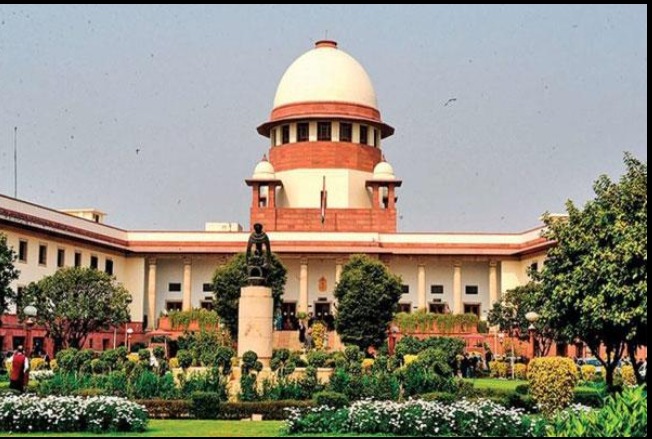
Case Details
Case Name: Supreme Court Bar Association v. Union of India & Anr.
Court: Supreme Court of India
Case No.: Writ Petition (Civil) No. 200 of 1995
Bench: S.C. Agrawal, G.N. Ray, A.S. Anand, S.P. Bharucha and S. Rajendra Babu, JJ.
Date of Judgment: 17 April 1998
Citation: (1998) 4 SCC 409; AIR 1998 SC 1895
Introduction
The relationship between the judiciary and the legal profession is fundamental to the administration of justice. Advocates are not merely representatives of their clients; they are also officers of the court and are expected to maintain professional discipline and respect for judicial institutions. The Supreme Court Bar Association v. Union of India (1998) is a significant constitutional decision that examined the boundary between the Supreme Court’s power to punish for contempt and the statutory authority of Bar Councils to discipline advocates.
The central question was whether the Supreme Court, while exercising its contempt jurisdiction under Article 129 read with Article 142 of the Constitution, could suspend an advocate’s licence to practice law. The Constitution Bench answered this question in the negative. The Court clarified that the power to punish contempt and the power to discipline an advocate for professional misconduct are distinct jurisdictions.
The judgment is particularly important because it placed a constitutional limitation on the otherwise wide power under Article 142 and reinforced the statutory role of the Bar Councils under the Advocates Act, 1961.
Facts of the Case
The dispute originated from the Supreme Court’s earlier decision in In Re: Vinay Chandra Mishra (1995). In that matter, an advocate had been found guilty of criminal contempt for conduct that interfered with the administration of justice. Apart from imposing a sentence of imprisonment, the Supreme Court had directed that the advocate be suspended from practising as an advocate for three years by invoking Articles 129 and 142 of the Constitution.
Article 129 declares the Supreme Court to be a court of record and gives it the power to punish for contempt of itself. Article 142 empowers the Supreme Court to pass orders necessary for doing complete justice in any matter pending before it.
The Supreme Court Bar Association challenged the Court’s authority to suspend an advocate’s licence to practice while exercising contempt jurisdiction. It argued that disciplinary action against advocates for professional misconduct falls within the statutory framework of the Advocates Act, 1961, particularly the disciplinary committees of the State Bar Councils and the Bar Council of India.
The matter was consequently placed before a Constitution Bench because it involved an important constitutional question concerning the relationship between Articles 129 and 142 and the disciplinary powers created under the Advocates Act.
The issue was therefore not whether an advocate could be punished for contempt. The Court’s power to punish contempt was undisputed. The real controversy concerned whether such punishment could extend to suspension of the advocate’s licence to practise law.
The case required the Court to determine whether Article 142 could be used to exercise a disciplinary power that legislation had specifically entrusted to another statutory authority.
Issues Before the Court
The principal issue before the Constitution Bench was:
- Whether the Supreme Court, while exercising its contempt jurisdiction under Article 129 read with Article 142 of the Constitution, could suspend or revoke an advocate’s licence to practise law for a specified period?
The Court also had to examine:
- Whether suspension from legal practice constitutes punishment for contempt or professional misconduct.
- Whether the disciplinary committees constituted under the Advocates Act, 1961 have exclusive authority to suspend or remove an advocate from practice for professional misconduct.
- Whether Article 142 permits the Supreme Court to exercise a power otherwise assigned by statute to the Bar Councils.
- Whether the earlier decision in In Re: Vinay Chandra Mishra (1995) correctly interpreted the scope of Articles 129 and 142.
Arguments of the Parties
- Arguments of the Supreme Court Bar Association
The Supreme Court Bar Association contended that the power to suspend an advocate from practice for professional misconduct belongs to the disciplinary machinery established under the Advocates Act, 1961.
It argued that Article 142, despite its broad language, could not be employed to create a jurisdiction that Parliament had expressly entrusted to another statutory authority. The power to do complete justice was intended to supplement the Court’s existing jurisdiction and could not be used to replace substantive statutory provisions.
The Association further submitted that contempt proceedings and disciplinary proceedings operate in different fields. A finding that an advocate has committed contempt does not automatically amount to a finding of professional misconduct requiring suspension of his licence.
- Arguments of the Union of India
The Solicitor General also supported the position that Articles 129 and 142 could not be interpreted as permitting the Supreme Court to create a new punishment or assume jurisdiction vested in the Bar Councils.
The argument was essentially that the Supreme Court could punish contempt in accordance with its constitutional jurisdiction, but suspension of the right to practice law was a disciplinary consequence governed by the Advocates Act.
The respondents therefore emphasised the distinction between contempt jurisdiction and professional disciplinary jurisdiction.
Judgment of the Court
The Constitution Bench allowed the petition and overruled the contrary principle laid down in In Re: Vinay Chandra Mishra (1995) to the extent that it permitted the Supreme Court to suspend an advocate’s licence to practise while exercising contempt jurisdiction.
The Court held that it could punish an advocate for contempt of court under Article 129, but it could not, merely on that basis, suspend or revoke the advocate’s licence to practice law under Article 142.
The disciplinary power relating to professional misconduct belongs to the Bar Councils under the Advocates Act, 1961. Therefore, if an advocate’s conduct also amounts to professional misconduct, the appropriate Bar Council may initiate disciplinary proceedings and impose the statutory punishment after following the prescribed procedure.
The Court nevertheless recognised that its contempt jurisdiction remains independent and effective. It also clarified that in appropriate circumstances it may prevent an advocate from appearing before the Court until the contempt is purged. Such a restriction is different from suspending the advocate’s general licence to practise law.
The Court thus established a clear institutional distinction between judicial contempt powers and professional disciplinary authority.
Reasoning of the Court
The reasoning of the Court was primarily based upon the distinction between contempt of court and professional misconduct.
- Contempt and Professional Misconduct are Distinct
The Court observed that when it exercises jurisdiction under Article 129, the matter before it is the alleged contempt of the Court. The proceeding is concerned with protecting the administration of justice and maintaining the authority of the judiciary.
Professional misconduct, however, is a separate legal issue. The Advocates Act establishes a specific mechanism for examining such misconduct and determining whether an advocate should be reprimanded, suspended, or removed from the State roll.
Therefore, the fact that the same conduct may constitute both contempt and professional misconduct does not merge the two jurisdictions.
- Article 142 is Broad but Not Unlimited
The judgment is particularly significant for its interpretation of Article 142.
The Court acknowledged that Article 142 gives the Supreme Court a very wide power to ensure complete justice. However, the Court rejected the proposition that this power allows it to disregard substantive statutory law.
Article 142 is a supplementary or curative power. It cannot be interpreted as a means of creating an entirely new jurisdiction where Parliament has already assigned that jurisdiction to another statutory body.
Consequently, the Court reasoned that Article 142 cannot be used to achieve indirectly what the Court could not do directly under the statutory framework.
- Advocates Act Provides a Complete Disciplinary Framework
The Advocates Act, 1961 specifically provides mechanisms for dealing with professional misconduct. Section 35 deals with punishment for professional misconduct, while the statutory appellate structure ultimately permits the Supreme Court to exercise appellate jurisdiction under Section 38.
The Court therefore held that the statutory scheme must be respected.
If an advocate commits contempt and the conduct also indicates professional misconduct, the appropriate Bar Council can take disciplinary action. The Court can bring such conduct to the attention of the concerned Bar Council, which is expected to act in accordance with law.
- Contempt Jurisdiction Remains Effective
The judgment did not weaken the Supreme Court’s authority to punish contempt.
The Court made it clear that an advocate found guilty of contempt may face appropriate contempt punishment. What the Court cannot do under Articles 129 and 142 is transform contempt jurisdiction into disciplinary jurisdiction over the advocate’s general licence.
The Court also recognised that the Supreme Court has control over the privilege of appearing as an Advocate-on-Record. Since that privilege is granted by the Supreme Court under its own rules, the Court may withdraw it in an appropriate case. Such withdrawal, however, is conceptually different from suspension of an advocate’s general licence to practice law.
- Overruling of Vinay Chandra Mishra
The Constitution Bench expressly disagreed with the earlier reasoning in In Re: Vinay Chandra Mishra. It held that the earlier decision had interpreted the scope of Article 142 too broadly by treating the power to suspend an advocate from practice as available within contempt jurisdiction.
The Court therefore overruled that aspect of the earlier judgment and restored the distinction between judicial contempt powers and professional disciplinary powers.
Significance of the Judgment
The judgment has considerable constitutional and professional significance.
First, it established an important limitation on Article 142. The provision cannot be treated as an unlimited constitutional power allowing the Supreme Court to disregard statutory schemes. The judgment therefore contributes to the broader principle that constitutional powers must operate within their proper legal purpose.
Second, the decision protects the institutional role of Bar Councils. Professional discipline is not simply an extension of judicial contempt jurisdiction. It is governed by a statutory procedure under the Advocates Act, 1961. This ensures that disciplinary consequences are imposed by the authority specifically entrusted with that responsibility.
Third, the judgment strengthens the principle of procedural fairness. Suspension or removal from the legal profession can have serious consequences for an advocate’s livelihood and professional status. Such action must therefore follow the procedure established by law rather than being imposed summarily in contempt proceedings.
Fourth, the decision maintains the authority of courts while preserving professional self-regulation. Courts retain their power to punish contempt, while Bar Councils retain their responsibility to maintain professional standards.
Finally, the judgment demonstrates that a single act can have different legal consequences under different jurisdictions. Conduct amounting to contempt may simultaneously justify disciplinary proceedings, but the two consequences must be imposed through their respective legal mechanisms.
Conclusion
Supreme Court Bar Association v. Union of India (1998) represents an important constitutional clarification regarding the limits of judicial power and the independence of statutory disciplinary mechanisms. The Supreme Court did not deny its authority to punish advocates for contempt. Instead, it carefully distinguished contempt jurisdiction from the disciplinary jurisdiction governing the legal profession.
The Court’s interpretation of Article 142 is particularly valuable. While acknowledging its exceptional breadth, the Court refused to treat the provision as a licence to override substantive statutory arrangements. The Advocates Act, 1961 entrusts disciplinary proceedings to the Bar Councils, and that legislative choice must be respected.
The judgment consequently creates a balance between judicial authority and professional regulation. It ensures that courts can protect the dignity and administration of justice through contempt powers while disciplinary bodies retain their legally assigned role in determining professional misconduct.
The decision therefore remains a significant authority on Article 142, contempt jurisdiction, professional misconduct and the institutional relationship between the judiciary and Bar Councils.
References
- Supreme Court Bar Association v. Union of India & Anr., (1998) 4 SCC 409; AIR 1998 SC 1895.
- https://indiankanoon.org/doc/1666530/
- In Re: Vinay Chandra Mishra, (1995) 2 SCC 584.
- Constitution of India, 1950 — art 129, 142 and 144.
- Advocates Act, 1961 — s 35, 37 and 38.
- Contempt of Courts Act, 1971.
- https://indiankanoon.org/doc/1188810/
- https://niyam.ai/blog/contempt-of-court-india
- https://anrandassociates.com/f/irretrievable-breakdown-of-marriage-in-india.
