


Case Details
Case Name: State of Punjab v. Major Singh
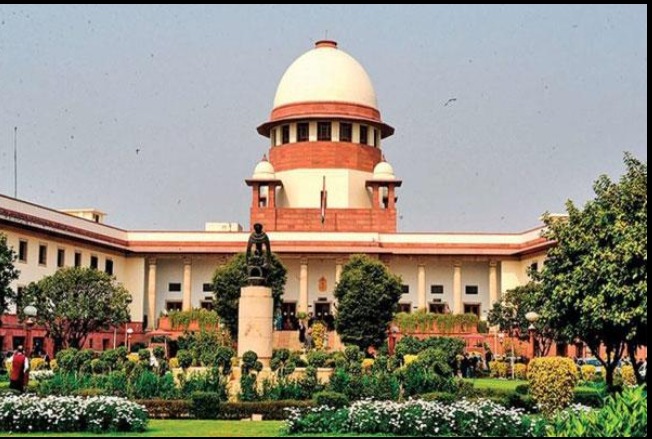
Court: Supreme Court of India
Bench: A.K. Sarkar, C.J.; J.R. Mudholkar, J.; and R.S. Bachawat, J.
Date of Judgment: 28 April 1966
Citation: AIR 1967 SC 63; 1966 SCR (2) 286
Relevant Provision: Section 354, Indian Penal Code, 1860
Subject: Outraging the modesty of a woman; meaning and scope of “modesty”; applicability of Section 354 IPC to a female infant
Introduction
The concept of “modesty” has long been associated with the protection of the dignity and sexual integrity of women under criminal law. Section 354 of the Indian Penal Code, 1860, criminalised assault or use of criminal force against a woman with the intention of outraging, or with knowledge of the likelihood of outraging, her modesty. However, the IPC did not expressly define the term “modesty”. This created difficult questions regarding the age, awareness and mental capacity of the victim.
State of Punjab v. Major Singh is a landmark decision in which the Supreme Court considered whether Section 354 IPC could apply when the victim was a female child only seven and a half months old. The case arose from an extremely serious assault upon an infant and required the Court to determine whether an infant could possess “modesty” capable of being outraged.
The Supreme Court, by a majority, held that the protection of Section 354 was not dependent upon the victim’s age, understanding or ability to react to the assault. The Court recognised modesty as an attribute of the female sex and held that an infant girl could also possess modesty capable of being outraged. The decision therefore adopted a broader and more objective understanding of the statutory protection afforded to women.
Facts of the Case
The respondent, Major Singh, entered a room at approximately 9:30 p.m., where a female child of about seven and a half months was sleeping. He switched off the light and subjected the infant to a sexual assault. During the incident, he caused serious injury to the child’s private parts, including rupture of the hymen and a tear inside the vagina. He fled when the child’s mother entered the room and switched on the light.
Major Singh was prosecuted for offences including causing hurt and assaulting the child with the intention of outraging her modesty under Section 354 IPC.
The case reached the Punjab High Court, where the matter was considered by a Full Bench of three judges. The judges were divided on whether the accused could be convicted under Section 354. Two judges took the view that an infant of seven and a half months could not possess the type of modesty contemplated by the provision because she was incapable of understanding the sexual nature of the act. The third judge took the contrary view. The resulting decision led the State of Punjab to appeal to the Supreme Court.
The Supreme Court therefore had to determine whether the concept of modesty under Section 354 depended upon the victim’s subjective awareness or whether it could exist independently of her age and mental understanding.
The case was particularly significant because the IPC defined “woman” broadly through Section 10. The Supreme Court therefore had to consider whether the word “woman” in Section 354 included a female human being of every age, including an infant.
Issues Before the Court
The principal issues before the Supreme Court were:
1. Whether a female child of seven and a half months could be considered a “woman” for the purposes of Section 354 IPC.
2. Whether an infant possesses “modesty” within the meaning of Section 354 IPC despite having no awareness or understanding of sexual conduct.
3. Whether the victim’s subjective reaction or awareness is necessary to establish that her modesty has been outraged.
4. Whether the acts committed by Major Singh constituted an assault or use of criminal force with the intention or knowledge required under Section 354 IPC.
5. Whether the respondent was therefore liable to be convicted under Section 354 IPC.
Arguments of the Parties
A. Arguments of the State of Punjab
The State argued that the conduct of Major Singh clearly amounted to an assault upon the infant and that the nature of the act was sexual and indecent.
It was submitted that Section 354 did not restrict the expression “woman” according to age. The IPC’s definition of “woman” in Section 10 referred to a female human being, and therefore an infant girl could not be excluded merely because of her age.
The State further contended that the application of Section 354 should not depend upon whether the victim was capable of understanding the nature of the assault. If subjective awareness were made essential, the provision would fail to protect infants and other women who were asleep, unconscious or otherwise incapable of understanding the conduct.
The State therefore argued that the Court should determine whether the accused’s conduct was of such a nature that it was capable of outraging the modesty of a female, rather than relying exclusively upon the victim’s subjective reaction.
B. Arguments on Behalf of Major Singh
The respondent’s position was that an infant of seven and a half months could not possess the type of modesty contemplated by Section 354.
The argument essentially rested upon the connection between modesty and awareness of sexual conduct. A child of such tender age had no developed understanding of sexuality, shame or modesty and therefore could not consciously experience an outrage to her modesty.
It was consequently argued that, even though the conduct was highly offensive and caused physical injury, the specific offence under Section 354 could not be established because one of its essential elements—the outraging of the victim’s modesty—was absent.
Judgment
The Supreme Court allowed the appeal filed by the State of Punjab and held Major Singh guilty under Section 354 IPC.
The Court concluded that the fact that the victim was only seven and a half months old did not exclude the application of Section 354. A female child was included within the expression “woman” for the purposes of the provision.
The majority held that modesty was an attribute associated with the female sex and was not dependent upon the victim’s age, consciousness or intellectual capacity. The absence of a developed sense of shame in an infant did not mean that the infant lacked the legal protection of modesty.
Justice Mudholkar explained that where an act done to or in the presence of a woman was clearly suggestive of sexual conduct according to common notions, it could fall within Section 354.
Justice Bachawat similarly emphasised that the essence of a woman’s modesty lies in her sex and that even a female child possesses this attribute from birth.
Justice Sarkar, the Chief Justice, took a dissenting position. The majority nevertheless convicted Major Singh under Section 354 IPC and imposed two years’ rigorous imprisonment and a fine of ₹1,000, with ₹500 of the fine, if realised, directed to be paid as compensation to the child.
Reasoning of the Court
The reasoning of the Court centred upon the meaning of the words “woman” and “modesty” in Section 354 IPC.
A. Meaning of “Woman”
The Court first considered whether an infant could fall within the expression “woman”.
Section 10 of the IPC provided that the word “man” denotes a male human being of any age and the word “woman” denotes a female human being of any age. Therefore, the statutory language did not create an age-based exclusion.
The Court consequently rejected the proposition that Section 354 was restricted to adult women. A female child, regardless of her age, could fall within the protection of the provision.
B. Meaning of “Modesty”
The IPC did not define “modesty”. The Court therefore had to determine its meaning in the context of Section 354.
Justice Mudholkar adopted an objective approach. He reasoned that the test should not depend entirely upon the actual reaction or understanding of the particular victim. If it did, absurd consequences could follow. For example, an act committed against a sleeping, unconscious or mentally incapable woman might escape Section 354 merely because she was unable to understand or react to it.
The Court therefore considered the nature of the accused’s conduct and whether it was sexually suggestive according to ordinary notions of decency.
C. Modesty as an Attribute of the Female Sex
Justice Bachawat famously reasoned that the essence of a woman’s modesty is her sex. Accordingly, modesty is not something that begins only when a girl reaches a particular age or develops an intellectual understanding of sexuality.
Even a female infant possesses the legal attribute of modesty because she belongs to the female sex.
This approach ensured that the law did not leave extremely young children outside the protection of Section 354 merely because they lacked the capacity to understand what had happened to them.
D. Importance of the Accused’s Intention
Section 354 also requires the accused to have acted with the intention of outraging the woman’s modesty or with knowledge that his conduct was likely to do so.
The Court therefore examined the nature and circumstances of Major Singh’s conduct. His deliberate actions, including entering the room, removing his clothes below the waist and sexually assaulting the infant, demonstrated the necessary criminal intention. The majority concluded that the conduct was clearly capable of outraging the modesty of the victim.
Thus, the absence of subjective awareness on the part of the infant did not eliminate the criminality of the accused’s conduct.
E. The Dissent of Chief Justice Sarkar
Chief Justice Sarkar adopted a narrower interpretation. He placed greater emphasis on the requirement that the accused must intend to outrage, or know that he is likely to outrage, the victim’s modesty.
In his view, the concept of modesty involved a sense of shame or awareness that could not reasonably be attributed to an infant of seven and a half months.
The majority rejected this approach and preferred an objective understanding of modesty that protected female victims irrespective of age or capacity for conscious reaction.
Significance of the Judgment
State of Punjab v. Major Singh is an important decision in the development of Indian criminal jurisprudence concerning offences against women and children.
First, the judgment established that Section 354 IPC applies to female persons irrespective of age. The Court refused to exclude infants from the statutory protection simply because they could not understand or respond to sexual conduct.
Second, the judgment developed an objective approach to the concept of modesty. The Court focused on the nature of the accused’s conduct rather than making the victim’s subjective reaction the decisive factor. This was particularly important in cases involving infants, unconscious persons or women unable to comprehend the nature of the act.
Third, the decision emphasised the importance of the accused’s intention or knowledge under Section 354. The protection of the victim was balanced with the requirement that the prosecution establish the mental element prescribed by the provision.
Fourth, the case exposed a limitation in the criminal law of the period: Section 354 was being used to address conduct against children even though it was framed around the concept of a “woman’s modesty.” Later legislative developments, particularly the enactment of the Protection of Children from Sexual Offences Act, 2012 (POCSO), created a specialised statutory framework for sexual offences against children. The historical significance of Major Singh therefore also lies in demonstrating the limitations of the older IPC framework in dealing with child sexual abuse.
The decision remains important for understanding the development of judicial protection of bodily dignity and sexual autonomy, particularly where the victim cannot express a conscious response.
Conclusion
State of Punjab v. Major Singh is a landmark decision concerning the interpretation of “modesty” under Section 354 of the Indian Penal Code. The Supreme Court’s majority rejected the argument that a female infant could not possess modesty merely because she lacked the capacity to understand sexual conduct.
The Court adopted an objective approach and recognised that the legal protection afforded to women cannot depend entirely upon age, awareness or the victim’s ability to express a reaction. The nature of the accused’s conduct and his intention or knowledge remain central to determining criminal liability.
The judgment was particularly significant because it extended the protective scope of Section 354 to female children and prevented the law from creating a protection gap based solely on age. Although subsequent legislation has substantially changed the legal framework governing sexual offences against children, the case remains an important authority in the historical development of Indian criminal law relating to the dignity and bodily integrity of women and children.
References
1. State of Punjab v. Major Singh, AIR 1967 SC 63; 1966 SCR (2) 286.
2. Indian Penal Code, 1860, Sections 10 and 354.
3. Rupan Deol Bajaj v. Kanwar Pal Singh Gill, (1995) 6 SCC 194.
4. Ramkripal v. State of Madhya Pradesh, (2007) 11 SCC 265.
5. Protection of Children from Sexual Offences Act, 2012.
6. S. Khushboo v. Kanniammal, (2010) 5 SCC 600.
