


Introduction
The case of Ramji Singh @ Mujeeb Bhai v. State of Uttar Pradesh is an important case when we talk about human dignity and the treatment of dead bodies in India.
At first glance, the case was about the poor condition of a government hospital mortuary. But when the Court looked deeper into the matter, it raised a much more meaningful question: Does a person lose all dignity after death?
The Court made it clear that the answer is no.
A person may no longer be alive, but his or her dead body should still be treated with respect, dignity and decency. The Court connected this principle with Article 21 of the Constitution, which protects the right to life and personal liberty.
The judgment is therefore important because it shows that the idea of human dignity does not completely end with death.
Details of the Case
| Particular | Details |
|---|---|
| Case Name | Ramji Singh @ Mujeeb Bhai v. State of U.P. & Others |
| Court | Allahabad High Court |
| Date of Judgment | 27 March 2009 |
| Case Number | Civil Misc. Writ Petition No. 38985 of 2004 |
| Bench | Justice Sunil Ambwani and Justice Dilip Gupta |
| Citation | 2009 SCC OnLine All 310; (2009) 5 All LJ 376 |
| Main Provision | Article 21 of the Constitution |
| Main Issue | Dignified treatment and disposal of dead bodies |
Facts of the Case
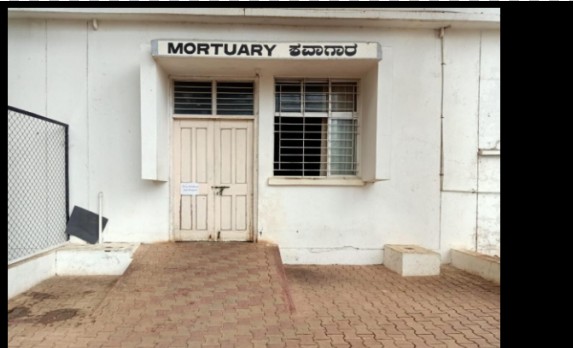
The case arose because of the very poor condition of the mortuary at Swarup Rani Nehru Hospital, Allahabad.
The condition of the mortuary was so bad that it raised serious questions about whether dead bodies were being treated with the basic dignity that every human being deserves.
A huge quantity of viscera and other materials connected with criminal cases had accumulated in the mortuary. According to the material placed before the Court, around 11,590 jars of viscera relating to approximately 5,795 criminal cases were lying there.
There were also problems with the basic infrastructure.
The mortuary had air-conditioning equipment, but it was not functioning properly. There were problems with ventilation, drainage, refrigeration and general sanitation. During power failures, there were inadequate arrangements to properly preserve dead bodies.
The situation was particularly serious in the case of unclaimed bodies.
When a person dies and nobody comes forward to claim the body, the State becomes responsible for ensuring that the body is handled properly. But because of inadequate facilities and insufficient funds, there were concerns about the improper disposal of such bodies.
The Court was therefore faced with a very basic but important question:
Just because a person has died and nobody has claimed the body, does that mean the body can be treated without dignity?
The Court clearly said that it cannot.
Issues Before the Court
The main issues before the Court were:
- Whether a dead person is entitled to dignity under Article 21 of the Constitution.
- Whether the State has a duty to treat dead bodies respectfully.
- Whether unclaimed bodies can be disposed of in an undignified manner.
- Whether proper facilities must be provided for preservation and disposal of dead bodies.
- Whether the State can use a dead body for legitimate purposes such as post-mortem and criminal investigation while still maintaining its dignity.
Laws Applied
Article 21 of the Constitution
The most important provision in this case was Article 21.
Article 21 provides protection of life and personal liberty.
Over the years, the Supreme Court has given Article 21 a very wide meaning. It is no longer understood merely as protection against the taking away of life. It also includes the right to live with dignity.
The Allahabad High Court took this idea one step further.
The Court explained that although a dead person cannot enjoy all the rights available to a living person, the dead body is still entitled to respectful treatment.
In other words, the Constitution does not give the State permission to treat a dead body as if it were merely an object.
Article 25 – Freedom of Religion
The Court also considered the importance of religious and cultural practices associated with death.
Different communities have different methods of dealing with the dead. Some follow cremation, while others follow burial or other religious practices.
Therefore, wherever possible and subject to law, the last rites of a deceased person should respect their religious and cultural traditions.
Important Cases Referred To
1. Pt. Parmanand Katara v. Union of India
The Court relied upon the principle laid down by the Supreme Court in Pt. Parmanand Katara v. Union of India.
The Supreme Court had recognized that human dignity and fair treatment are not completely lost after death.
This became an important foundation for understanding the rights associated with the treatment of dead bodies.
2. Ashray Adhikar Abhiyan v. Union of India
The Court also referred to Ashray Adhikar Abhiyan v. Union of India.
The Supreme Court recognized the importance of providing decent burial or cremation, including for people whose bodies remain unclaimed.
This principle is especially important because an unclaimed body is still the body of a human being.
3. Jamnadas Parasram v. State of Madhya Pradesh
The Court also considered Jamnadas Parasram v. State of Madhya Pradesh, which supported the principle that a dead body deserves appropriate protection and respectful treatment.
Arguments of the Petitioner
The petitioner brought the poor condition of the mortuary to the attention of the Court.
His basic argument was that the State cannot forget about a person’s dignity simply because that person has died.
The petitioner highlighted several problems, including:
- Poor maintenance of the mortuary.
- Lack of proper refrigeration.
- Faulty air-conditioning.
- Poor drainage and sanitation.
- Accumulation of viscera and other materials.
- Inadequate arrangements for unclaimed bodies.
- Lack of sufficient funds for proper disposal.
- Improper and unhygienic handling of dead bodies.
The petitioner essentially argued that these conditions were inhuman and inconsistent with the constitutional idea of dignity.
Arguments/Stand of the State
The State authorities explained the steps that had been taken to improve the situation.
They informed the Court about measures relating to:
- Repair and maintenance of the mortuary.
- Disposal of accumulated material.
- Improvement of refrigeration facilities.
- Better arrangements for dead bodies.
- Provision of funds.
- Improvement of sanitation.
However, the Court was not satisfied with merely receiving assurances.
It wanted the authorities to take real and practical steps to improve the conditions.
Judgment of the Court
The Allahabad High Court gave its judgment on 27 March 2009.
The Court recognized an important constitutional principle:
Dignity does not completely end with death.
The Court held that the expression “person” under Article 21 can, in a limited sense, include a dead person.
This does not mean that a dead person continues to possess every constitutional right in exactly the same way as a living person.
Rather, it means that the dead body must be treated with dignity and respect.
The Court also recognized that there are legitimate reasons for dealing with a dead body.
For example, the authorities may need to:
- conduct a post-mortem;
- conduct a forensic examination;
- determine the cause of death;
- collect evidence;
- identify the deceased;
- preserve evidence for a criminal investigation.
These activities are completely legitimate when carried out according to law.
But even while carrying them out, authorities should not unnecessarily disrespect or mistreat the body.
Directions Given by the Court
The Court directed the authorities to improve the conditions of the mortuary.
The directions included better arrangements for:
- Preservation of dead bodies.
- Refrigeration and deep-freezing facilities.
- Air-conditioning and ventilation.
- Drainage and sanitation.
- Proper maintenance of the mortuary.
- Disposal of unclaimed bodies.
- Adequate funds for transportation and disposal.
- Proper handling of viscera and other material connected with criminal cases.
The Court also expressed concern about using dead bodies in an inappropriate manner, such as parading them publicly during protests or disputes.
A dead body, according to the Court’s reasoning, should not be turned into a tool for creating pressure or making a political statement.
Ratio Decidendi
The ratio decidendi, or the main legal principle of the case, can be stated in simple words:
A dead person is entitled to dignity even after death, and the State has a duty to ensure that the dead body is treated respectfully and disposed of in a dignified manner, subject to lawful requirements such as post-mortem and criminal investigation.
How Does This Apply in India?
This judgment is not limited to one hospital or one mortuary. Its principle has much wider importance in India.
Treatment of unclaimed bodies
Sometimes people die without family members or relatives coming forward to claim their bodies.
The State cannot simply ignore such people.
Even an unclaimed body deserves a dignified burial or cremation.
Post-mortem examinations
The judgment does not prevent doctors or police officers from conducting post-mortems.
A post-mortem may be essential for discovering the truth about a death.
However, the examination must be carried out according to law and with appropriate respect for the body.
Criminal investigations
In cases involving murder, suspicious death or other offences, the dead body can be important evidence.
Police and forensic authorities may therefore examine and preserve the body.
But the need for investigation does not give authorities a licence to treat the body carelessly or disrespectfully.
Religious rights
The case is also important for respecting the religious and cultural practices of the deceased.
Where legally possible, the last rites should be conducted according to the person’s religion, customs and traditions.
Government responsibility
The case also places a practical responsibility on the government.
It is not enough to say:
“Nobody has come to claim the body.”
The State must have proper systems for:
- identification;
- preservation;
- transportation;
- documentation;
- burial or cremation.
Why Is This Case Important?
The real importance of this judgment lies in its human approach.
Imagine a person dying alone, with nobody coming forward to claim the body. It would be easy for the authorities to treat that person as just another unidentified corpse.
But the Court reminded the State that the absence of relatives does not mean the absence of dignity.
Every dead body belonged to a human being who had a life, relationships, emotions, beliefs and a place in society.
Therefore, the State has a moral as well as constitutional responsibility to ensure that the person’s final treatment is respectful.
Critical Analysis
The judgment strikes a balance between human dignity and practical legal requirements.
On one side, it protects the dignity of the deceased. On the other side, it recognizes that dead bodies may have to be examined for criminal investigations, medical purposes and scientific reasons.
This is a sensible approach.
If the Court had completely prohibited examination or handling of dead bodies, criminal investigations would become extremely difficult. At the same time, allowing authorities to treat bodies carelessly would undermine the very idea of human dignity.
Therefore, the Court adopted a middle path:
The body can be examined when the law requires it, but it must always be treated with dignity.
Conclusion
Ramji Singh @ Mujeeb Bhai v. State of Uttar Pradesh is an important case because it reminds us that human dignity is not something that should disappear immediately when a person dies.
The case started with the poor conditions of a government mortuary, but it ultimately raised a much larger constitutional issue.
The Allahabad High Court recognized that Article 21 protects the dignity of a dead person in a limited sense. The State therefore has a responsibility to preserve, handle and dispose of dead bodies respectfully.
The judgment is particularly important for unclaimed bodies, because the absence of family members does not make a person’s body less deserving of respect.
At the same time, the Court made it clear that necessary procedures such as post-mortems, forensic examinations and criminal investigations can continue, provided they are carried out according to law and with due respect.
