


Case Details
Case Name: M.C. Mehta v. Kamal Nath and Others
Court: Supreme Court of India
Bench: Justice Kuldip Singh and Justice S. Saghir Ahmad
Date of Judgment: 13 December 1996
Citation: (1997) 1 SCC 388
Subject: Public Trust Doctrine and Environmental Protection
Introduction
M.C. Mehta v. Kamal Nath is a landmark Supreme Court judgment on the Public Trust Doctrine and environmental protection in India. Imagine a river being pushed out of its own path so that a private resort can have a better view. That is more or less what happened on the banks of the River Beas in Himachal Pradesh and it is what brought the case of M.C. Mehta v. Kamal Nath before the Supreme Court of India. Filed as a public interest litigation by the well known environmental lawyer M.C. Mehta, the case questioned how a private motel came to occupy forest land along a fragile riverbank and whether the government had the authority to hand over such land in the first place. What began as a newspaper report soon turned into one of the most quoted judgments in Indian environmental law because the Court used it to introduce an entirely new legal idea into the country: the Public Trust Doctrine. This doctrine held that certain natural resources are simply too important to be owned privately and that the State only holds them in trust for the people. This commentary looks at how the case unfolded what the Court decided, and why the judgment continues to matter three decades later.
Facts of the Case
The story begins with Span Motels Private Limited a company that ran a resort called Span Resorts near the River Beas in Kullu district, Himachal Pradesh. The company later launched a more ambitious project the Span Club, on land adjoining the resort. This land formed part of the riverbed and its floodplain and had originally been recorded as forest land.
In 1981, the Himachal Pradesh Government leased about 27 bighas and 12 biswas of this land to the family that controlled Span Motels. The lease was renewed in 1994 with the approval of the Ministry of Environment and Forests. What made the matter politically sensitive was that Kamal Nath who was the Union Minister of Environment and Forests at the relevant time had close family connections to the company that owned the resort.
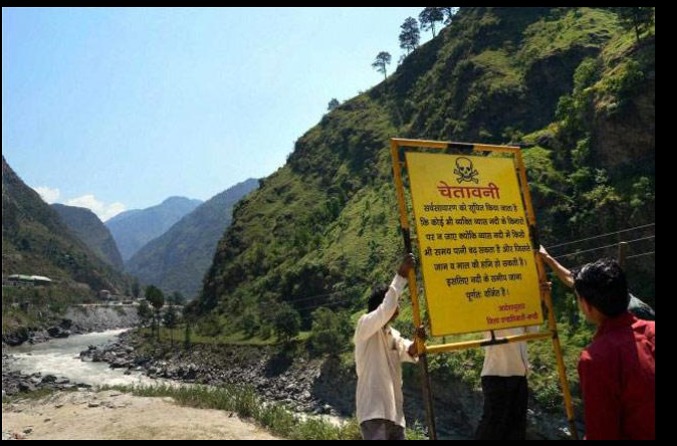
To protect its property and expand the club, the motel management interfered directly with the river itself. It moved earthmovers and bulldozers into the riverbed and altered the course of the River Beas so that the water would flow away from the resort and closer to the opposite bank where the forest department owned land. In September 1995, heavy monsoon flooding hit the area, and the diverted river caused massive destruction, reportedly running into crores of rupees.
The Indian Express carried a report on this encroachment in February 1996 under a headline about the minister daring the mighty Beas. The Supreme Court took note of this report and treated it as the basis for a public interest litigation since M.C. Mehta had already been pursuing environmental matters before the Court. Kamal Nath and Span Motels filed replies denying any personal ownership or wrongdoing but the Court examined the shareholding pattern and the sequence of official approvals in detail.
Issues Before the Court
The Court had to answer a few connected questions. First, whether the Himachal Pradesh Government and the Union Ministry of Environment and Forests were justified in leasing ecologically sensitive forest land along the riverbank to a private company for commercial use. Second, whether the interference with the natural course of the River Beas amounted to environmental degradation that the State was bound to prevent. Third, and most significantly for the future of Indian law, whether the Public Trust Doctrine formed a part of Indian law and if so, what obligations it placed on the government when it dealt with natural resources like rivers and forests.
Arguments of the Parties
On behalf of the petitioner, it was argued that the lease of forest land bordering the river was itself an abdication of the government’s duty to protect a fragile ecosystem. The petitioner’s side relied on scientific and environmental material to show that constructing a club on the floodplain and then diverting the river to safeguard that construction had triggered the very flooding disaster that occurred in 1995. It was contended that natural resources such as rivers and forests cannot be treated as ordinary commodities available for lease to private business, since the public at large has a stake in their preservation.
Kamal Nath for his part denied that he held any right, title or interest in Span Motels or its resort, arguing that he had been wrongly made a party to the case simply because press reports had linked his name to the company. Span Motels similarly argued that the land in question belonged to it under a valid, government approved lease and that the construction near the club had actually been undertaken to protect the property from future flooding rather than to cause any harm. They maintained that the allegations against them were exaggerated and driven by an intention to damage their reputation. The Court, however, was not persuaded by the denial of ownership since it found that virtually all the shares of the motel company were held by Kamal Nath’s family members.
Judgment
The Supreme Court ruled firmly against the motel and the government authorities that had permitted the encroachment. It quashed the prior environmental approval granted in November 1993 and cancelled the 1994 lease deed in its entirety. The Himachal Pradesh Government was directed to take back the leased area and restore it to its natural pre-encroachment condition. The Court further directed the National Environmental Engineering Research Institute (NEERI) to inspect the site and assess the cost of reversing the ecological damage caused by the motel’s construction activity in the riverbed.
Beyond these specific directions the Court laid down the broader legal principle that has made this case so significant. It held that the Public Trust Doctrine is very much a part of Indian law, meaning that certain resources by their very nature belong to everyone and cannot become the subject of private ownership when doing so would harm the wider public interest.
Reasoning of the Court
Justice Kuldip Singh, writing for the Bench, traced the Public Trust Doctrine back to ancient Roman law under which resources such as the seashore, rivers, air, and forests were treated as res communist or common property held by the sovereign in trust for the unrestricted use of the public. The Court drew on this history along with the American public trust cases particularly the well known decision in Illinois Central Railroad Co. v. Illinois, to show that the doctrine had already developed internationally as a check on government power over shared natural resources.
Applying this doctrine to Indian conditions, the Court reasoned that certain resources, precisely because of their fundamental importance to human survival cannot be reduced to items of private ownership or commercial trade. A river the Court observed is exactly this kind of resource. When the government leased land along the Beas riverbank for a private club and allowed the natural flow of the river to be altered for commercial convenience it acted contrary to its role as a trustee of that resource rather than its owner.
The Court also connected the doctrine to the constitutional right to a healthy environment under Article 21, reinforcing that environmental protection is not merely a policy preference but a legal obligation flowing from fundamental rights. It rejected the argument that the encroachment and river diversion were undertaken for protective reasons holding instead that the construction itself and the subsequent flooding, demonstrated the seriousness of the ecological harm caused. Importantly, the Court also invoked the polluter pays principle indicating that anyone who causes environmental damage must bear the cost of restoring it a theme it would develop further in the later stage of the same litigation when it imposed exemplary damages on the motel.
Significance of the Judgment
This case is widely regarded as a turning point in Indian environmental jurisprudence because it was the first time the Supreme Court formally recognised the Public Trust Doctrine as part of Indian law. Before this, Indian courts had relied mostly on statutory provisions and the right to life under Article 21 to address environmental harm. This judgment gave courts an additional, independent tool: the idea that some resources are simply held by the State on behalf of the people, and any attempt to privatise or commercially exploit them at the cost of the public is inherently suspect.
The ruling has since been cited in a long line of cases dealing with coastal land, forests, wetlands, and water bodies and it continues to guide how Indian courts evaluate government decisions to lease or alienate ecologically sensitive land. It also strengthened the polluter pays principle in Indian law setting the stage for stricter accountability of private parties who damage the environment for commercial gain. In this sense, the judgment did more than resolve one dispute over one river it reshaped the vocabulary that Indian courts use to think about environmental protection.
Conclusion
M.C. Mehta v. Kamal Nath remains a foundational case for anyone studying Indian environmental law not because the facts were unusually complex but because of what the Supreme Court chose to do with them. By tracing a legal principle from Roman law to modern Indian conditions the Court reminded the government that some resources, like rivers and forests do not belong to any single owner but are held in trust for everyone. Nearly thirty years later as India continues to grapple with encroachments on riverbanks, wetlands, and coastal land, the Public Trust Doctrine articulated in this case still offers courts a powerful reminder that the environment is not there to be leased away for private convenience.
References
M.C. Mehta v. Kamal Nath, (1997) 1 SCC 388.
M.C. Mehta v. Kamal Nath, (2000) 6 SCC 213 (subsequent order on damages).
Illinois Central Railroad Co. v. Illinois, 146 U.S. 387 (1892).
Constitution of India, Article 21.
