


Title
Attorney General for India v. Satish & Anr.: Interpretation of Sexual Assault under Section 7 of the POCSO Act and Rejection of the “Skin-to-Skin Contact” Requirement
Case Details
Case Name: Attorney General for India v. Satish & Anr.
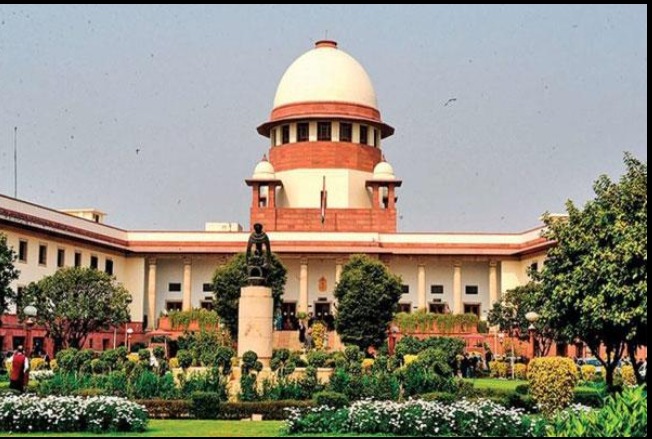
Court: Supreme Court of India
Bench: Justice Uday Umesh Lalit, Justice S. Ravindra Bhat and Justice Bela M. Trivedi
Date of Judgment: 18 November 2021
Citation: 2021 INSC 762; (2021) SCC OnLine SC 980
Case Numbers: Criminal Appeal Nos. 1410–1414 of 2021
Introduction
The Protection of Children from Sexual Offences Act, 2012 (POCSO Act) was enacted to provide comprehensive protection to children from sexual assault, sexual harassment and exploitation. A significant question concerning the interpretation of Section 7 of the Act arose when the Bombay High Court adopted a narrow interpretation of the expression “physical contact” and held that direct skin-to-skin contact was necessary to constitute sexual assault. The decision created serious concerns regarding the effective implementation of the protective object of POCSO. In Attorney General for India v. Satish & Anr., the Supreme Court examined whether “physical contact” under Section 7 requires direct skin-to-skin contact. The Court rejected the narrow interpretation and held that the essential ingredient of sexual assault is sexual intent, and not skin-to-skin contact. The judgment consequently became an important precedent for the purposive interpretation of POCSO provisions and the protection of children from sexual offences.
The case arose from appeals against judgments of the Bombay High Court, Nagpur Bench, concerning offences committed against minor children under the POCSO Act and the Indian Penal Code.
Facts of the case
In the case concerning Satish, the victim was a 12-year-old girl. The prosecution alleged that the accused had taken the child to his house, pressed her breast, attempted to remove her salwar and pressed her mouth when she attempted to raise an alarm. The Special Court convicted Satish under Sections 342, 354 and 363 of the IPC and Section 8 of the POCSO Act.
On appeal, the Bombay High Court acquitted the accused of the POCSO offence under Section 8 while maintaining his conviction under certain IPC provisions. The High Court reasoned that there was no direct physical contact or “skin-to-skin” contact between the accused and the child and consequently the requirement of sexual intent under Section 7 of POCSO was not established in the manner contemplated by the provision.
The Attorney General for India brought the High Court judgment to the notice of the Supreme Court, expressing concern that the interpretation could establish a dangerous precedent. The Supreme Court initially stayed the acquittal and subsequently heard the matter along with connected appeals involving similar questions concerning the interpretation of Section 7 of POCSO. The Supreme Court was therefore required to determine the correct meaning of the expressions “touch” and “physical contact” in Section 7 and whether the prosecution was required to establish direct skin-to-skin contact for proving sexual assault.
Issues before the Court
The principal issues before the Supreme Court were:
- Whether skin-to-skin contact is necessary to constitute “sexual assault” under Section 7 of the POCSO Act?
- Whether the expression “physical contact” in Section 7 should be interpreted narrowly as direct contact between the skin of the accused and the skin of the child?
- Whether an act involving physical contact with sexual intent, even where clothing or another barrier exists, can constitute sexual assault under POCSO?
- Whether the High Court had correctly interpreted Section 7 by requiring direct skin-to-skin contact?
- Whether the prosecution had established the required sexual intent in the circumstances of the case.?
Arguments of the Parties
Arguments of the Appellant
The Attorney General for India challenged the interpretation adopted by the Bombay High Court and contended that Section 7 of POCSO does not impose any requirement of direct skin-to-skin contact. The expression “physical contact” should be understood according to its ordinary meaning and in light of the protective purpose of the legislation.
It was argued that requiring skin-to-skin contact would create an artificial loophole in the law. An offender could potentially escape liability merely because the child was wearing clothes or because the accused used an intervening material. Such an interpretation would defeat the very purpose of POCSO, which is intended to provide effective protection to children from sexual abuse.
Arguments of the Respondent
The defence contended that the expression “sexual intent” in Section 7 is a question of fact and that the prosecution must establish the necessary mental element. It was also argued that “physical contact” should be given its ordinary and specific meaning and that the absence of direct physical contact should be considered while determining whether the statutory ingredients of sexual assault were satisfied.
Judgement
The Supreme Court allowed the appeals and rejected the Bombay High Court’s interpretation requiring skin-to-skin contact. The Court held that “skin-to-skin contact” is not a requirement under Section 7 of the POCSO Act. The expression “physical contact” cannot be narrowly interpreted to mean only direct contact between the skin of the accused and the skin of the child.
The Court held that the most important ingredient of sexual assault is sexual intent, rather than the existence of skin-to-skin contact. Consequently, an act committed with sexual intent involving physical contact without penetration may constitute sexual assault under Section 7 and be punishable under Section 8 of POCSO. The Supreme Court therefore set aside the High Court’s approach and restored the relevant POCSO convictions. The decision ensured that the protective provisions of POCSO could not be defeated through an excessively technical interpretation of the statutory language.
Reasoning Of The Court
The Supreme Court adopted a purposive and child-protective interpretation of Section 7 of the POCSO Act. It observed that statutory provisions must be interpreted in a manner that advances their legislative purpose rather than defeats it.
The Court rejected the High Court’s narrow interpretation because limiting “physical contact” to skin-to-skin contact would produce an absurd and impractical result. For example, an offender could touch a child’s body with clothing, gloves, a sheet or another intervening material and potentially escape the application of Section 7. Such an interpretation would substantially weaken the protection intended by POCSO. The Court relied upon the principle Ut Res Magis Valeat Quam Pereat, meaning that a statutory provision should be interpreted so that it operates effectively rather than becomes ineffective. The Court held that a narrow interpretation that defeats the legislative purpose cannot be accepted. The Court also examined the language of Section 7 and distinguished between the expressions “touch” and “physical contact.” The provision specifically refers to touching the vagina, penis, anus or breast of a child with sexual intent, while it also covers “any other act with sexual intent which involves physical contact without penetration.” Thus, physical contact is not restricted to direct skin contact. The Court emphasised that sexual intent is the central ingredient. Whether an act was committed with sexual intent is a question of fact that must be determined from the circumstances of each case. The Court refused to introduce a requirement that Parliament had not expressly incorporated into Section 7. The Court further considered the statutory presumptions under Sections 29 and 30 of the POCSO Act. Once the prosecution establishes the foundational facts constituting the alleged offence, the statutory presumption concerning culpable mental state may operate, subject to rebuttal by the accused. In Satish’s case, the surrounding circumstances including taking the child to his house, attempting to remove her clothing, pressing her breast and preventing her from raising an alarm supported the finding of sexual intent. Accordingly, the Supreme Court concluded that requiring skin-to-skin contact would undermine the protective purpose of POCSO and create an unjustified loophole in the law.
Significance of the Judgment
The judgment in Attorney General for India v. Satish & Anr. is a landmark decision in the interpretation of the POCSO Act, 2012. Its most important contribution is the clear rejection of the proposition that sexual assault requires direct skin-to-skin contact. The Court firmly established that the existence of sexual intent, and not the absence or presence of clothing between the offender and child, is central to determining an offence under Section 7.
The judgment prevents offenders from exploiting technical loopholes in child-protection legislation. Had the skin-to-skin interpretation been permitted to stand, an offender could potentially avoid POCSO liability merely because the victim was clothed or because an intervening material existed during the physical contact. The decision also reinforces the principle of purposive statutory interpretation, particularly in legislation intended to protect vulnerable groups. The Court recognised that POCSO must be interpreted in a manner that advances its fundamental objective of protecting children from sexual abuse.
Further, the judgment clarifies the significance of sexual intent under Section 7 and provides guidance to courts dealing with allegations of sexual assault against children. It therefore strengthens the protective framework of POCSO and ensures that procedural or technical interpretations do not defeat substantive child protection.
Conclusion
The decision in Attorney General for India v. Satish & Anr. represents an important advancement in Indian criminal law concerning the protection of children from sexual offences. By rejecting the “skin-to-skin” requirement, the Supreme Court ensured that Section 7 of the POCSO Act is interpreted according to its protective purpose rather than through a narrow technical approach.
The judgment establishes that sexual intent, rather than direct skin contact, is the essential consideration in determining sexual assault under Section 7. It also demonstrates the judiciary’s commitment to preventing loopholes that could undermine child-protection legislation. Overall, the decision strengthens the effectiveness of POCSO and provides an important precedent for courts dealing with sexual offences against children. It ensures that the law remains focused on its fundamental objective: protecting children from sexual abuse and exploitation while giving effect to the legislative intent behind the POCSO Act.
References
- Attorney General for India v. Satish & Anr., 2021 INSC 762; (2021) SCC OnLine SC 980, Supreme Court of India.
- The Protection of Children from Sexual Offences Act, 2012, particularly Sections 7, 8, 29 and 30.
- The Indian Penal Code, 1860, relevant provisions concerning offences against children.
- Satish v. State of Maharashtra, 2021 SCC OnLine Bom 72, Bombay High Court, Nagpur Bench.
