


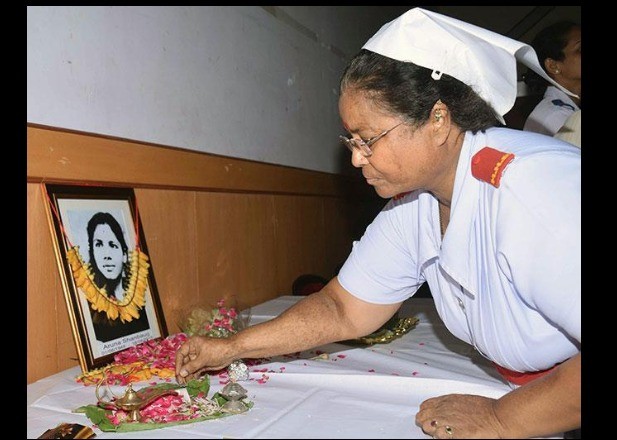
Case Details
Case Name: Aruna Ramchandra Shanbaug v. Union of India
Citation: (2011) 4 SCC 454
Court: Supreme Court of India
Date of Judgment: 7 March 2011
Bench: Justice Markandey Katju and Justice Gyan Sudha Misra
Introduction
Aruna Shanbaug v. Union of India is a landmark judgment concerning euthanasia, the right to life, and personal liberty under Article 21. The judgment examined whether passive euthanasia could be legally permitted in India. The case arose from the tragic medical condition of Aruna Shanbaug, who remained in a persistent vegetative state for several decades following a brutal assault.
The Supreme Court examined whether a person in a persistent vegetative state could be allowed to die by withdrawing life-sustaining treatment. The Court distinguished between active euthanasia and passive euthanasia and laid down guidelines for the withdrawal of life support in certain circumstances.
Facts of the Case
Aruna Ramchandra Shanbaug was working as a nurse at King Edward Memorial Hospital in Mumbai. On 27 November 1973, she was brutally assaulted by a hospital sweeper, resulting in severe brain damage and leaving her in a persistent vegetative state.
Following the incident, Aruna remained under the care of the hospital staff for several decades. She could not communicate normally or live independently and required continuous care.
In 2009, journalist Pinki Virani filed a petition before the Supreme Court as Aruna’s next friend, seeking permission to stop her feeding and allow her to die peacefully.The petition was presented as being in the interests of Aruna and sought recognition of her right to die with dignity.
Issues Before the Court
The Supreme Court primarily considered:
- Whether the right to life under Article 21 includes a right to die.
- Whether passive euthanasia could be legally permitted in India.
- Whether life-sustaining treatment could be withdrawn from a person in a persistent vegetative state.
- What safeguards should govern decisions concerning passive euthanasia.
Judgment
The Supreme Court did not permit withdrawal of Aruna’s life-sustaining care because the KEM Hospital staff were willing to continue caring for her and considered continued care to be in her best interests. However, the Court distinguished between active and passive euthanasia and laid down safeguards for passive euthanasia.
However, the Court made an important distinction between active euthanasia and passive euthanasia.
Active euthanasia involves an intentional act to cause death, such as administering a lethal substance. The Court held that active euthanasia remains illegal.
Passive euthanasia, on the other hand, involves withholding or withdrawing medical treatment necessary to continue life in certain circumstances. The Court held that passive euthanasia could be permitted under specific conditions and safeguards.
Guidelines Laid Down by the Court
Ratio Decidendi
The key principle of the judgment was that passive euthanasia may be permitted in certain circumstances, subject to appropriate safeguards and judicial oversight.
The Court also clarified that the right to life under Article 21 does not automatically include a general right to die. However, the concept of personal liberty and dignity is relevant when considering end-of-life medical decisions.
Significance of the Judgment
The judgment was significant because it was one of India’s earliest major Supreme Court decisions directly addressing euthanasia and end-of-life care.
It provided a legal distinction between active and passive euthanasia and created a framework for dealing with cases involving withdrawal of life support.
The decision also placed human dignity and individual autonomy at the centre of discussions concerning the end of life.
Impact on Indian Law
The decision in Aruna Shanbaug became an important foundation for subsequent developments concerning passive euthanasia and advance medical directives.
The Supreme Court later revisited the issue in Common Cause v. Union of India (2018) and recognized the right to die with dignity as part of Article 21 in the context of terminal illness and end-of-life decisions. The later judgment also recognized the legal validity of advance medical directives, subject to safeguards.
Critical Analysis
The judgment attempted to balance two competing considerations: the preservation of life and the individual’s right to dignity.
A complete prohibition on withdrawing life support may prolong medical intervention even when recovery is impossible. At the same time, allowing euthanasia without safeguards could create serious risks of abuse, particularly for vulnerable patients who cannot communicate their wishes.
Judicial oversight helps prevent arbitrary decisions and ensures that life support is withdrawn only in appropriate cases.
The judgment expanded Article 21 by recognising the right to live and die with dignity. The judgment contributed to the evolving interpretation of Article 21, particularly in relation to dignity and end-of-life decisions.
Conclusion
Aruna Shanbaug v. Union of India remains a landmark decision in Indian constitutional and medical law. The Supreme Court rejected active euthanasia but recognized that passive euthanasia could be permissible under carefully regulated circumstances.
The judgment emphasized that decisions concerning life-sustaining treatment require compassion, medical assessment, constitutional safeguards and judicial supervision. It also laid the foundation for later judicial recognition of the right to die with dignity under Article 21.
Overall, the case represents an important step in balancing the sanctity of life, personal liberty, medical ethics and human dignity in India’s legal system.
References
- Aruna Ramachandra Shanbaug v. Union of India & Ors., (2011) 4 SCC 454.
- Gian Kaur v. State of Punjab, (1996) 2 SCC 648.
- Common Cause (A Regd. Society) v. Union of India, (2018) 5 SCC 1.
- Law Commission of India, Report No. 241, Passive Euthanasia – A Relook.
