


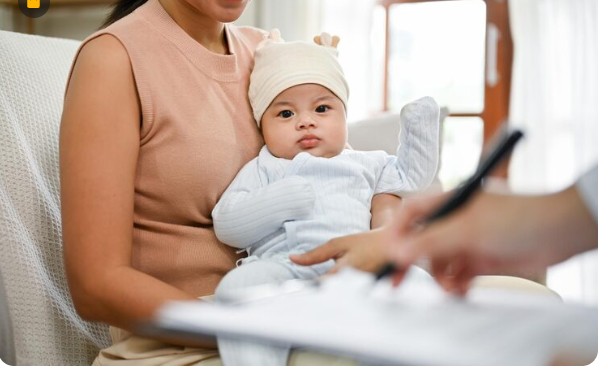
Birth and death registration may appear to be a routine administrative process, but it forms one of the most important foundations of legal identity in a modern State. A birth certificate can establish a person’s date and place of birth, while a death certificate provides an official record of death and is necessary for several legal and administrative purposes.
In India, the Registration of Births and Deaths Act, 1969 provides the statutory framework for registration of births and deaths. The law was substantially modernised through the Registration of Births and Deaths (Amendment) Act, 2023, which introduced measures such as a national database, electronic certificates and the use of the birth certificate as a key document for establishing date and place of birth.
In 2026, Parliament considered another amendment aimed particularly at delayed registration. The Registration of Births and Deaths (Amendment) Bill, 2026 was introduced on 29 July 2026 and passed by both Houses in August 2026. In India, the Registration of Births and Deaths Act, 1969 provides the statutory framework for registration of births and deaths. One of its important changes concerns births and deaths reported more than two years after their occurrence. Under the amendment, such registration requires an order from a Judicial Magistrate of the First Class, rather than an executive authority.
The reform raises an important legal and social question:
Can stricter verification of delayed birth and death registration prevent fraudulent records without making it harder for vulnerable people to obtain legal identity?
The answer requires balancing two objectives—preventing fraudulent registration and ensuring access to civil registration.
Why Is Birth and Death Registration Important?
Civil registration creates an official record of important events in a person’s life.
A birth record can become the basis for establishing:
- date and place of birth;
- legal identity;
- access to education;
- government employment;
- voter registration;
- passports and other documents;
- social welfare benefits; and
- other rights and services.
The 2023 amendments strengthened this role by providing for the use of a birth certificate as a document to establish the date and place of birth for several purposes, including admission to educational institutions, preparation of electoral rolls, appointment to government posts, issuance of passports and Aadhaar, and other purposes specified by the Central Government.
This makes accurate civil registration extremely important.
At the same time, the greater the legal importance attached to a certificate, the greater the potential consequences of false or manipulated registration.
This is where the 2026 amendment becomes significant.
What Does the 2026 Amendment Change?
The existing framework already treats delayed registration differently depending on how long the delay lasts.
For information supplied after one year, an order from an authorised authority is required. Under the 2026 amendment, where information is supplied more than two years after the birth or death, the order can be issued only by a Judicial Magistrate of the First Class.
The change therefore introduces a stronger judicial verification mechanism for extremely delayed registration.
The reasoning behind such a system is understandable. A birth or death that has remained unregistered for several years may involve difficulties in verifying the underlying facts. Documentary evidence may be incomplete, witnesses may be unavailable and there may be a greater possibility of manipulation.
Judicial scrutiny can therefore provide an additional safeguard.
But there is another side to the issue.
Could a stricter procedure unintentionally make legal identity more difficult for people who were never properly registered in the first place?
The Case for Stricter Verification
One of the strongest arguments supporting the amendment is prevention of fraudulent records.
A birth certificate is no longer merely a local administrative document. Following the 2023 amendments, birth records can interact with several important government databases and services.
The 2023 legislation created a framework for a national database of registered births and deaths, with State-level databases also being maintained. Information can be made available for updating other databases, subject to the statutory framework.
Consequently, an incorrect birth record can have consequences beyond the civil registration system.
For example, an incorrect date of birth could potentially affect eligibility for education, employment or other government services.
A stronger verification process for registrations made many years after the event may therefore help protect the integrity of official records.
Judicial Magistrate as the Verifying Authority
The most notable aspect of the 2026 amendment is the shift towards judicial scrutiny for extremely delayed registration.
This is significant because a Judicial Magistrate operates within the judicial system rather than ordinary executive administration.
The change can provide an additional layer of independent examination before a delayed birth or death is officially entered into the civil registration system.
The Magistrate can examine the available evidence and determine whether the claimed event can be satisfactorily established.
This may also reduce the possibility of arbitrary administrative decisions.
Does involving a judicial authority make delayed registration more reliable?
Potentially, yes but judicial involvement also comes with a practical concern: access to justice.
If a person living in a remote or economically disadvantaged area must approach a court for a delayed registration, the additional procedure may involve travel, legal assistance, documentation and expense.
Therefore, the effectiveness of the amendment will depend heavily upon how accessible and simple the judicial process actually becomes.
The Problem of Vulnerable Communities
Not everyone who lacks a birth certificate is attempting to manipulate the registration system.
Some people may never have been registered because of:
- home births;
- poverty;
- lack of awareness;
- migration;
- displacement;
- natural disasters;
- inadequate access to government offices;
- institutional failures; or
- loss of family documents.
Children and adults in vulnerable circumstances may therefore have genuine difficulty proving their date or place of birth.
The 2023 parliamentary analysis itself identified concerns about children in need of care and protection who may lack birth certificates and could face difficulty establishing age for purposes such as school admission.
The 2026 amendment should therefore not be understood merely as an anti-fraud measure.
It must also be examined from the perspective of access to legal identity.
Legal Identity and the Right to Dignity
The importance of civil registration extends beyond administrative convenience.
A person without official documentation can experience difficulty accessing education, employment, welfare schemes and other public services.
Legal identity is closely connected with the ability of a person to participate fully in society.
The State therefore has a dual responsibility:
- to ensure that official records are accurate; and
- to ensure that genuine individuals are not excluded because of administrative failures.
This creates an important constitutional dimension.
Can the State demand perfect documentation from a person when the State itself failed to create or maintain a proper record of that person’s birth?
The answer should encourage a system that is strict against fraud, but not unnecessarily harsh against genuine applicants.
Digitalisation and the National Database
The 2023 amendments introduced a major technological component into the registration framework.
The Registrar General of India is responsible for maintaining a national database of registered births and deaths, while Chief Registrars maintain State-level databases. The system is intended to improve the accuracy and efficiency of civil registration.
Electronic certificates can also make the registration process more convenient.
Digitalisation has several advantages:
- faster access to certificates;
- reduced paperwork;
- easier verification;
- better coordination between government databases;
- reduction in duplicate records; and
- improved statistical information for public policy.
However, centralised databases also make data accuracy and privacy increasingly important.
If an incorrect birth record enters the national system, correcting it may become more complicated when the information has already been linked with several other databases.
Therefore, stronger verification at the registration stage can potentially reduce downstream errors.
Privacy Concerns
The 2023 amendments also introduced provisions concerning Aadhaar details of parents and informants, where available, in specified birth-registration circumstances.
This creates a broader question concerning the protection of personal information.
How can India create an efficient national civil-registration database without turning every birth or death record into an unnecessarily exposed source of personal information?
The answer requires strong safeguards relating to:
- access control;
- purpose limitation;
- data accuracy;
- correction mechanisms;
- cybersecurity; and
- accountability for unauthorised access.
Digital efficiency cannot come at the cost of privacy and data security.
Is Judicial Oversight Enough?
Although judicial verification is an important safeguard, it cannot by itself solve every problem.
The quality of the system will depend upon the evidence that applicants are permitted to submit and the manner in which applications are processed.
A person who lacks a birth certificate may also lack other formal documents.
Therefore, the rules and procedures should allow authorities to consider a reasonable range of evidence, including hospital records, school records, vaccination records, family records and other credible material where appropriate.
The objective should be to determine whether the claimed birth or death is genuine—not simply whether the applicant possesses a particular document.
Making the System More Accessible
The success of the amendment will ultimately depend on implementation.
The Government could strengthen the system by providing:
- simple application procedures;
- clear lists of acceptable evidence;
- assistance for persons unable to navigate the process;
- affordable access to the judicial mechanism;
- online tracking of applications;
- mechanisms for correcting genuine errors;
- special assistance for children and vulnerable persons; and
- awareness programmes in rural and remote areas.
Such safeguards can ensure that stronger verification does not become an obstacle to legitimate registration.
Balancing Accuracy and Accessibility
The central challenge of the 2026 amendment is therefore not whether delayed registration should be regulated.
It clearly should.
The real question is how regulation should be designed.
Too little verification can allow fraudulent records to enter the system.
Too much procedural complexity can prevent genuine citizens from obtaining the documents they need.
The ideal approach is therefore one that follows the principle of proportionate verification.
The longer the delay, the stronger the verification may reasonably become. However, the applicant should still have a realistic opportunity to establish the truth of the event.
Conclusion
The Registration of Births and Deaths (Amendment) Bill, 2026 represents another step in India’s effort to modernise its civil registration system. The reform therefore seeks to strengthen the Registration of Births system while balancing verification with access to legal identity.
Its decision to require a Judicial Magistrate First Class order for registration more than two years after the occurrence introduces an additional layer of scrutiny for highly delayed cases.
The reform has an important objective: protecting the credibility of official birth and death records in an increasingly digital administrative system.
But accurate records should not become a barrier to legal identity.
The real success of the 2026 amendment will depend on whether India can prevent fraudulent registration while ensuring that a genuine person is never denied recognition simply because their birth was not properly recorded years earlier.
The future of civil registration lies in finding the correct balance between verification and accessibility, digitalisation and privacy, administrative efficiency and individual rights.
A strong registration system should not merely record who was born and who died. It should ensure that every genuine individual can obtain reliable proof of their identity while protecting the integrity of the national civil-registration system.
Ultimately, the purpose of registration law should be neither excessive bureaucracy nor unchecked convenience. It should be accurate, accessible and trustworthy civil identity.
