


Introduction
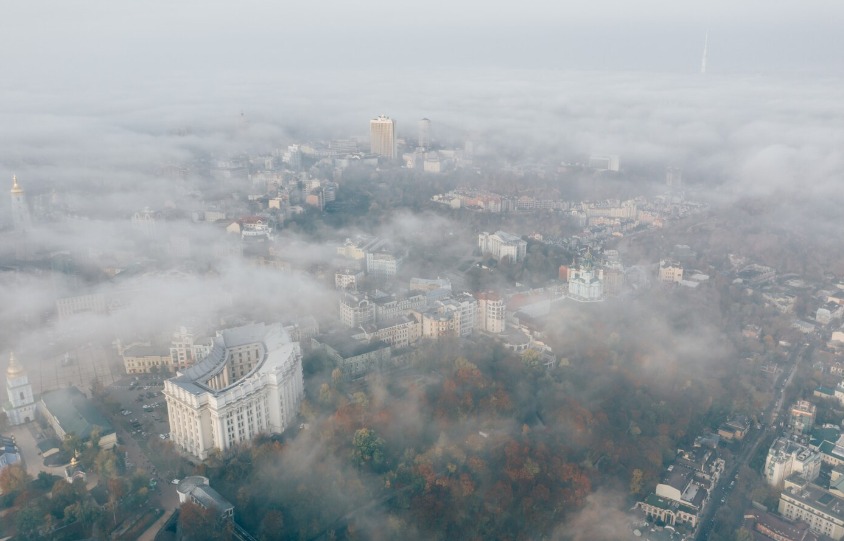
What happens in Delhi is that, every year, it is choked with grey. Schools are shut down, flights are grounded, and hospitals are running at optimal capacity, and people are advised to “stay indoors.” It is thus the way and means whereby the act of breathing has become a life-threatening activity every year for the country.
The topic of air pollution is no more applicable from the angle of topics connected to environmental concerns of Delhi but is actually “a health emergency” and “environmental and constitutional concerns in India.”
Awareness Regarding Air Pollution in India
Air pollution can be described as a condition of the atmosphere containing hazardous substances which influence the health of not only human beings but also affect the surroundings. Reports of air pollution have been increasing at a high rate within the Indian population because of the high rates of urbanization and fossil fuel usage.
The Problem of Air Pollution in India Due to the Following Reasons
- Vehicular emissions
- Industrial smoke and emissions
- Construction dust
- Burning of crop residue (stubble burning)
- Use of solid fuels like coal and wood
- Firecrackers during festivals
According to a report filed by the World Health Organization, most of the cities in India are always at the top of the list of the most pollutive cities in the world, and this leads to many health issues such as lung and heart ailments and a low life expectancy.
Delhi: The Epicentre of the Pollution Problem
When discussing the issue, the Air Quality of Delhi is quite a contrast and serious in nature. Usually, the quality index is dangerous within Delhi, especially in the days of October and January. The “Severe” Air Quality Index may be exceeded.
What Causes Air Pollution in Delhi?
There are quite a few reasons because of which this level of air quality is also experienced in the city of Delhi, and they have been enumerated below:
1. Automotive Pollution
Delhi has the largest number of registered vehicles within the country. Also, because of the availability of the metro, the usage of private cars is still predominant, resulting in constant emissions that pollute the atmosphere.
2. Stubble Burning
For example, the farmers in the neighbouring states of Punjab and Haryana have been found to burn the agricultural waste after extracting the crops. This allows the pollutants to be transported through the wind current to Delhi and hence the poor quality of the air in the city.
3. Dust and Construction
This dust is suspended in the atmosphere because of the presence of taller buildings.
4. Industrial Emissions
Industrial sectors, especially in Delhi, release toxic gas emissions in this area, whereas there is no such initiative to check this type of pollution.
5. Topographical and Climatic Factors
During the winter months, the temperature inversion occurs alongside a low wind speed. Thus, the air containing pollution will be closer to the earth’s surface. Consequently, a thick formation of fog or smog forms.
6. Health and Social Impact
Air pollution may have a severe impact on health and may result on a person within his or her own life.
The children may suffer from asthmatic attacks, and there may be problems in respect of the respiratory system of the senior members of his or her family. The healthy youth may suffer from irritation of his or her respiratory system due to his or her lungs, eyes, and passages within his or her body itself. Lung cancer and heart ailments and early death may also occur.
In addition to the after-effects that the metal has on the health of the human population, there could also be secondary effects that relate to issues concerning business and industry, as well as society at large:
- Productivity of the Worker
- Attending School
- Tourism and Economy
- Overall Quality of Life
Legal Scenario Already Existent in India to Handle Air Pollution
India has several laws and constitutional provisions aimed at protecting the environment and public health.
Constitutional Provisions
The Right to Life has been held to be a basic Right and has been made a guarantee in the sense of Article 21 of the Indian Constitution.
The Indian Supreme Court has observed:
“The Right to Life guaranteed by Article 21 of the Constitution includes the right to a pollution-free environment, which has a close nexus to life itself.”
The obligation that is implicit in Article 48A is that it is an obligation on the State to look after the environment.
It is the obligation to safeguard the environment, as is the provision to the citizens under Article 51A(g).
Statutory Laws
1. Air (Prevention and Control of Pollution) Act, 1981
This is the key legislation that deals with air pollution. One of the mandates of this legislation is to provide powers on how to control and prosecute offenders to the respective pollution control boards.
2. Environment (Protection) Act, 1986
Another law in line is the Environment Protection Act, 1986. It gives vast powers to the federal government to take all the steps needed for protecting the environment.
3. Motor Vehicles Act, 1988
It includes managing automotive emission, in addition to encouraging the use of cleaner fuels.
Judicial Intervention
The judicial system has been trying to overcome the widespread problem of pollution in the capital of India, which is Delhi.
In the suit of M.C. Mehta vs. Union of India, historical decisions have been delivered by the Supreme Court of India with regards to the following issues:
- Significance of CNG in the transport sector of any city.
- Retirement of old diesel vehicles.
- Temporary bans on firecrackers.
- Construction activities regulation.
- Graded Response Action Plan (GRAP) is operational in dealing with levels of pollution as per limits.
What Else Can the Government Do?
In this case, several topics came up during the discussion.
It appears that with this legislation in place, less concentration is being placed on the enforcement of this legislation.
Some of the legislation that can be enforced by the government includes:
A. Stricter Enforcement
The law will only be useful if it is implemented. The law has to ensure there are checks as well as stringent punishment mechanisms on those who will violate the law.
B. Green Transport Policies/Initiatives
Subsidies to electric cars, development of public transport, and limiting the movement of private cars through congestion charges.
C. Farmers Support
Providing cheap alternatives for burning stubbles and providing economic incentives to farmers.
D. Construction Activity Regulations
Construction obligatory steps to control and comply with dust.
E. Real-Time Monitoring and Transparency
Open data comes with some measure of accountability.
F. Inter-State Coordination
Air pollution does not restrict itself to a particular state. There is a need to work together as a group that includes Delhi and the other states.
The Role of Citizens: The People of Delhi
Yet, the onus is not completely on the government authorities. As Delhiites, the people also have the responsibility towards themselves to understand that they contribute towards the creation and management of pollution.
Easy Steps to Follow
- Use public transport or car pool.
- Avoid using private transport when there is no urgent need.
- Perform routine car care and maintenance.
- Do not burn garbage.
- Reduce electric use.
- Do not say yes to crackers.
- Watch and help in enforcing anti-pollution laws.
Citizen participation makes for stronger governance. In situations where citizens engage on a voluntary basis, the enforcement is then implemented by their voluntary compliance.
Legal Literacy and Citizen Participation
Collaboration between the law and society can collectively ensure the safeguarding of nature.
Citizens can:
- Make complaints to the pollution control boards.
- Reach the Courts through Public Interest Litigation (PIL).
- Participate in awareness campaigns.
- Demand the authorities to ensure accountability.
When environmental law is rather removed from what is now seen as penal law, in practice, environmental law involves, of course, the prevention, the responsibility, and the shared duty.
A Crisis That Demands Reflection
The problem of air pollution in Delhi is far from being any kind of disaster, such as floods, earthquakes, and drought, which come and then go, and is confined to being a sudden, secret, and rare phenomenon, but is rather a slow, visible, and regular phenomenon.
Due to air pollution, issues such as governance, accountability, and the future of urban India come forth with each and every polluted morning.
Since the city has been constantly growing and the winter season has been constantly repeating, arriving every time with a thickening smog, the discussion on the issue of air pollution has been progressing rather far from any kind of closure.
Citations
- Central Pollution Control Board, National Air Quality Index (AQI) Report (Government of India, 2023), https://cpcb.nic.in/aqi_report.php (accessed 28 December 2025).
- Ministry of Environment, Forest and Climate Change, Graded Response Action Plan (GRAP) for Delhi-NCR (Government of India, 2017, as amended), https://moef.gov.in/wp-content/uploads/2018/04/GRAP-Delhi-NCR.pdf (accessed 28 December 2025).
- Shibani Ghosh, “Air Pollution in India: A Review of Policy and Legal Framework” (2020) 5 Indian Journal of Environmental Law 45.
- Lavanya Rajamani, “Public Interest Environmental Litigation in India” (2006) 18(3) Journal of Environmental Law 293 (Oxford University Press).
- Constitution of India, Article 21.
- Constitution of India, Article 48A.
- Constitution of India, Article 51A(g).
