


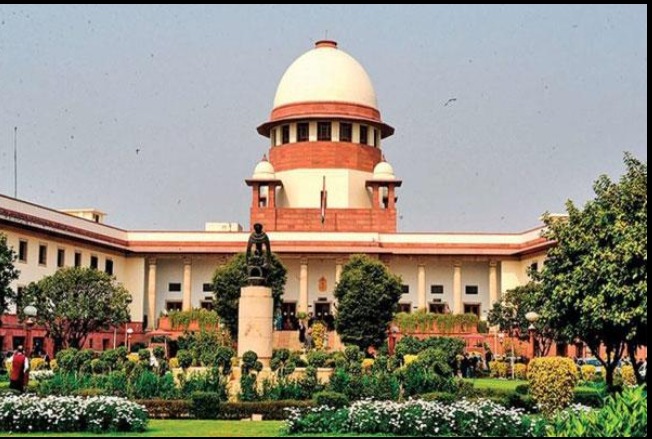
The Supreme Court of India occupies a central position in the country’s constitutional and judicial system. As the final court of appeal and the interpreter of the Constitution, it deals with constitutional matters, civil and criminal appeals, public interest litigation and disputes involving important questions of law. The growing volume and complexity of litigation, however, has placed considerable pressure on the Court’s existing judicial capacity.Against this background, Parliament has increased the sanctioned strength of judges of the Supreme Court through the Supreme Court (Number of Judges) Amendment Act, 2026. The legislation amends the Supreme Court (Number of Judges) Act, 1956 and raises the number of judges, excluding the Chief Justice of India, from 33 to 37.
The amendment raises an important legal and institutional question: Can simply increasing the number of judges improve the Supreme Court’s ability to deal with its workload, or are wider judicial reforms also necessary?
Background of the Amendment
Evolution of the Supreme Court’s Judicial Strength
The strength of the Supreme Court has been increased several times since the enactment of the 1956 legislation. The original law provided for a substantially smaller number of judges. The most recent increase before 2026 was made through the Supreme Court (Number of Judges) Amendment Act, 2019, which increased the sanctioned strength from 30 to 33 judges, excluding the Chief Justice of India.
In May 2026, the Union Cabinet approved a proposal to increase the strength by four judges, from 33 to 37, excluding the CJI. The government stated that the additional judges would allow the Court to function more efficiently and facilitate speedy justice.
The proposal was initially given effect through the Supreme Court (Number of Judges) Amendment Ordinance, 2026, promulgated on 16 May 2026. The subsequent Bill was introduced in the Lok Sabha on 20 July 2026 to replace the Ordinance.
What Does the 2026 Amendment Change?
Increase from 33 to 37 Judges
The principal change is straightforward. The maximum sanctioned number of Supreme Court judges, excluding the Chief Justice of India, has been increased from 33 to 37. This means that the sanctioned strength including the CJI is effectively 38.
The amendment does not restructure the Supreme Court or change its constitutional jurisdiction. Instead, it modifies the statutory limit on the number of judges who may serve on the Court.
Parliamentary Passage
The Bill was introduced in the Lok Sabha on 20 July 2026. It was passed by the Lok Sabha on 3 August 2026 and by the Rajya Sabha on 5 August 2026. It replaced the earlier Ordinance and formed part of the legislation passed during the 2026 Monsoon Session.
The government has also stated that the expenditure relating to the salaries of judges, supporting staff and associated facilities will be met from the Consolidated Fund of India.
Why Was the Increase Considered Necessary?
Increasing Judicial Workload
The Supreme Court handles a broad range of matters. Unlike constitutional courts in some other jurisdictions, it has a substantial appellate docket in addition to its constitutional functions.
A larger sanctioned strength can provide greater judicial capacity for hearing and deciding cases. More judges may allow the Court to constitute additional benches and distribute judicial work among a larger number of judges.
The Union Government has specifically identified greater efficiency and speedy justice as the expected impact of the increase.
However, judicial capacity cannot be measured only by the number of judges. The functioning of benches, courtrooms, registry facilities, research support, listing practices and the nature of cases before the Court can also influence how quickly matters are disposed of.
Can More Judges Reduce Case Pendency?
Capacity and Disposal of Cases
Increasing the number of judges can potentially increase the number of judicial hours available for hearing cases. It can also facilitate the constitution of more benches, depending upon the administrative arrangements of the Court.
For example, if additional judges are appointed and adequate supporting infrastructure is available, the Court may have greater flexibility in allocating judges to different categories of cases.
However, an increase in sanctioned strength does not automatically translate into an immediate reduction in pendency. The effectiveness of the reform will depend on whether the additional positions are filled, whether adequate courtrooms and staff are available and how cases are allocated.
This distinction is important because sanctioned strength and working strength are not necessarily the same thing. A statutory increase creates additional capacity, but appointments and infrastructure are necessary for that capacity to become operational.
Constitutional and Legal Framework
Article 124 and the Supreme Court
Article 124 of the Constitution establishes the Supreme Court of India and provides the constitutional framework concerning the appointment and conditions of service of its judges.
The Constitution itself does not permanently fix the number of judges. Parliament has the legislative authority to regulate the strength through law. The Supreme Court (Number of Judges) Act, 1956 was enacted for this purpose.
The 2026 amendment therefore operates within the existing constitutional structure rather than creating a new constitutional institution.
Potential Benefits of the Amendment
Greater Judicial Capacity
The immediate institutional benefit of increasing the sanctioned strength is the availability of four additional judicial positions.
A larger Court can potentially distribute cases among more judges and create greater flexibility in constituting benches.
Scope for More Constitution Benches
The Supreme Court is required to constitute Constitution Benches for matters involving substantial questions concerning the interpretation of the Constitution. Article 145(3) requires such a bench to consist of at least five judges.
The availability of additional judges may provide greater flexibility when the Court needs to constitute Constitution Benches while continuing to deal with its regular appellate workload.
However, the effect will depend upon the Court’s administrative allocation of judges and the overall volume of constitutional and non-constitutional litigation.
Faster Access to Justice
The government has presented the amendment as a measure that can help the Supreme Court function more efficiently and provide speedy justice.
For litigants, quicker disposal can be particularly significant where cases involve personal liberty, constitutional rights, commercial disputes or long-running civil and criminal litigation.
Limitations of Increasing Judicial Strength
Judges Alone Cannot Solve Pendency
The addition of four judges should not be viewed in isolation from the wider functioning of the judicial system.
Case pendency may also be influenced by the number of cases reaching the Supreme Court, adjournments, procedural requirements, vacancies, legal aid, court infrastructure, registry functioning and the availability of lawyers and supporting personnel.
Therefore, increasing judicial strength is one institutional measure, but it does not by itself address every cause of judicial delay.
Infrastructure and Support Staff
Every additional judge requires appropriate infrastructure. This includes courtrooms, chambers, research assistance, administrative staff and technological facilities.
The government has indicated that expenditure on judges, supporting staff and other facilities will be met from the Consolidated Fund of India.
This makes implementation an important part of the reform. Without adequate supporting infrastructure, the practical benefit of additional judicial positions may be limited.
What Does the Amendment Mean for Access to Justice?
Beyond Numbers
The central objective of judicial reform is not merely to increase the number of judges but to ensure that citizens can obtain timely and effective justice.
The 2026 amendment provides the Supreme Court with additional sanctioned capacity. Its actual impact will depend on how that capacity is used.
Other reforms may therefore need to operate alongside the increase, including efficient case management, better listing practices, technological improvements, adequate registry support and measures aimed at reducing unnecessary delays.
The amendment can consequently be understood as one component of a broader effort to strengthen judicial administration rather than a complete solution to the problem of pendency.
Conclusion
The Supreme Court (Number of Judges) Amendment Act, 2026 marks another step in the gradual expansion of the judicial strength of India’s highest court. By increasing the sanctioned strength from 33 to 37 judges, excluding the Chief Justice of India, Parliament has created additional statutory capacity for the Supreme Court.
The government has linked the reform with improved efficiency and speedy justice. At the same time, the practical effect of the amendment will depend on appointments, infrastructure, supporting staff, case-management systems and the manner in which judicial resources are allocated.
The amendment therefore brings the focus to a larger question in Indian judicial administration: Is increasing the number of judges enough to address the challenges faced by the Supreme Court, or must it be accompanied by wider procedural and institutional reforms?
The answer will ultimately depend on how the additional judicial strength is implemented and whether it translates into more efficient hearings, timely disposal and meaningful access to justice. The 2026 amendment provides additional capacity; its long-term significance will be measured by how effectively that capacity is utilised.
