


Introduction
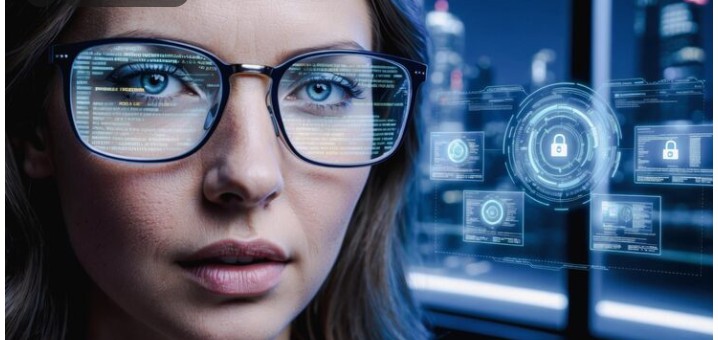
The commercial adoption of AI wearable technologies, ranging from Meta Ray-Bans to microscopic pinhole lenses, has created a clash between law and philosophy. In everyday life, millions of Americans are routinely observed without their knowledge or consent by sensors incorporated into their attire, capable of recording High Definition video, capturing audio, and relaying real-time information to artificial intelligence in the cloud. This emergence of such technologies has raised, and continues to challenge, this crucial question: Do individuals maintain a legally recognizable right against non-consensual recording in the public sphere?
The answer today is murky and changing. While in strictly private locations there is an inviolable right not to be recorded against your will, legally speaking, in public spaces, people had a diminished expectation, or no expectation of privacy “at all” for those matters that could be seen by one’s own naked eye. These new AI wearable technologies however threaten to undo our prior notions of this established doctrine, leading to re-evaluation of the concepts by judicial and legislative bodies internationally.
The Legal Divide: Public vs. Private Expectation of Privacy
Whether or not to allow non-consensual recording at a particular place would also depend on where that place is. According to international legal norms, there are two major categories:
- Private Spaces (High Expectation of Privacy): Any filming would be impermissible without consent. It would thus be unlawful, at the time the filming took place in those places, for a voyeur to conduct non-consensual video recording, using secret surveillance cameras hidden in plants or on covert smart glasses, through criminal voyeurism Laws (like Section 77 of Bharatiya Nyaya Sanhita of India, 2023; Section 66E of Information Technology Act of India, 2000).
- Public Places (Traditional Loss of Expectation): Any activity occurring on public streets, transit platform, open square where spatial privacy is historically not anticipated, could be considered, a legally protected photographic freedom. As, a recording in these places captures events in plain sight of onlookers as seen by a lens camera.
Why AI Smart Glasses Break Existing Legal Frameworks
Public privacy expectations are based on people holding a hand to a camera or a phone held to eye level. These movements create a signal to passersby of what is being done to record the scene. Space signals are ignored in smart-wear.
- The Invisible Bystander: In spite of efforts made by manufacturers to include very small, easily covered LED lights at the temple, smart glasses resemble normal prescription lenses and offer almost zero warning to passersby. People walking around will be passively recorded as data for algorithms.
- Ambient Data Ingestion: Unlike taking a quick picture with the cell, AI smart glasses are built to record ambient information-signs the glasses can read, conversations happening nearby they can transcribe, a continuous stream of live information sent off to a data center for algorithms.
- The Real-time Biometric extraction : When wearable hardware meets facial recognition, the true privacy shock hits. Someone wearing smart glasses could scan the faces of everyone walking by, connect them to online data bases (using algorithms, obviously), pull up an individual’s home address, employment, and social network in real time.
Statutory and Judicial Protections Under Indian Law
While right to privacy is guaranteed fundamental right in the Indian constitution, courts and statutes are faced with novel problems in dealing with ambient surveillance:
A. The Constitutional Guarantee (Article 21):
In Justice K.S. Puttaswamy (Retd.) v. Union of India (2017), apex court recognized the right to privacy as fundamental right under article 21. The judgment declared that informational privacy, right of person to bodily integrity, right over one’s own personality constitutes the necessary prerequisite of human dignity. Although the ruling, largely restrains the overreach of the state, constitutional doctrine of this case, is beginning to have impact on civil court adjudication of private to private infringement.
B. The Digital Personal Data Protection (DPDP) Act 2023:
Under the provisions of the DPDP Act 2023, facial appearance, voice recordings, and biometric data can be used as classified ‘personal data’.
- Consent Paradox: The DPDP Act, in this regard, is contingent upon obtaining express, informed consent from data subjects, before data Fiduciaries can process their personal data. However, the invisible bystander issue, within context of smart glasses is of critical consequence: Data subjects are unaware that their biometric information is being recorded (by someone else’s glasses); thus, they are unable to consent (or withhold consent, from its processing), and thus are unaware of their right to demand the erasure of data.
C. Common-Law Personality and Publicity Rights:
In situations where video recordings made on smart glasses are then published online, commercially exploited, or used to train any AI model, then parties whose rights would be affected, could seek civil injunction. The Indian High Courts have shown an increasing readiness to grant dynamic takedown orders in relation to right to one’s persona, voice, and face identity against their unjust utilization online (vide: Anil Kapoor v. Simply Life India & Ors., 2023).
International Regulatory Approaches
Regulators around the world are doing a number of different things in response to the increasing lack of public anonymity.
- European Union (GDPR & AI Act): Processing of face data from bystanders is regulated by the General Data Protection Regulation (GDPR) under strict conditions, banning any use without legal basis,. A proposed EU AI Act severely limits systems on real time biometric identification in public areas, thus preventing/delaying use of cutting edge AI smart glass functionality throughout Europe.
- Judicial & Court Room Bans: Legislatures and judicial systems, such as state court systems (NY) and U.K. Court houses alike, in response to the increased security risk that covert recording represents, have instituted required bands, requiring visitors to check any camera equipped eyewear at the door.
The Future: How the Law Must Adapt
To protect basic human anonymity in public spaces without killing off hardware innovation, researchers and privacy proponents advocate three specific solutions:
1. Hardware-level mandatory standardization: Implement legislation mandating that consumer eye-wear capable of recording visual data shall have a physically tampering-proof recording indicator such as the non-disableable hardware LED.
2. Prohibiting real-time facial recognition incorporation into products: Impose serious criminal penalties for consumer wear ware that incorporates real-time facial recognition or any real-time web-scraping search engine.
3. The evolution of public privacy from a spatial test to a proportional one: Define what “public privacy” means on the fly as a transition of the old definition (“Am I on the street or at the house?”), to a new one (“Is perpetual, automated biometric-capturing, on the public, proportional?).
Conclusion
In a public square, there is no right on your part for another person to not be aware they are observing or recording you. There is, however, a right that no person subject you to unobtrusive biometric indexing, perpetual algorithmic profiling or the unauthorized private commercial/synthetic uses of your identifying image. Wearable devices that capture the everyday image without regard to discreet observation means that law needs to take notice. Public freedom in a truly democratic society requires walking in public not as involuntary training material for a screen.
References
1. Constitution of India: Article 21 (Right to Life, Personal Liberty, and Privacy).
2. Supreme Court Precedent: Justice K.S. Puttaswamy (Retd.) v. Union of India, (2017) 10 SCC 1.
3. High Court Precedent: Anil Kapoor v. Simply Life India & Ors., CS (COMM) 652/2023 (Delhi High Court).
4. Statutes & Regulations:
-
-
- Digital Personal Data Protection (DPDP) Act, 2023.
- Bharatiya Nyaya Sanhita (BNS), 2023 (Section 77 – Voyeurism; Section 78 – Stalking).
- Information Technology Act, 2000 (Section 66E – Privacy Violations).
- European Union General Data Protection Regulation (GDPR) (Articles 5, 6, & 9).
- European Union Artificial Intelligence Act (2024/2026).
-
