

Introduction
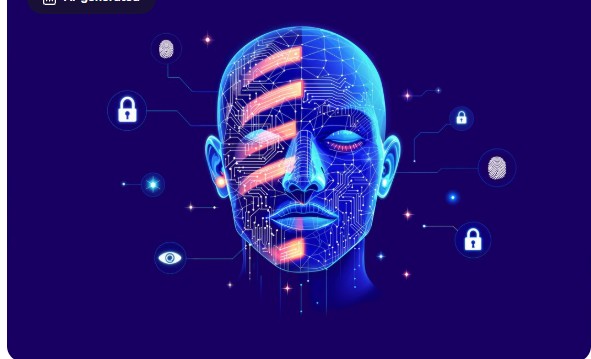
As high-resolution facial recognition systems continue to proliferate across the globe, while the public is under relentless CCTV surveillance, aided by synthetic AI deepfakes and ultra-realist filters; a purely science-fiction-era question is being aggressively debated in courtrooms: Who, really, owns your face?
Millions of photographs of our faces are captured, processed, stored and analysed daily by tech giants, banks, national security services and social networks. More than just an intrinsic visual of our embodied persona, your face is now, arguably, a premium biological metric, your password to numerous secure services, and even araw-datasetforgenerativeai The very instant your image is captured by public camera systems or by platforms aiming to sculpt you into a synthetic avatar, contentious legal questions follow-does the person documented and observed herein have proprietary control over facial characteristics and data, or does the system responsible for its’ captivation hold greater ownership over it? Common law suggests this should naturally and wholly be you, But within Indian law(albeit an extremely underdeveloped area), Ownership of a face, however, presents us a layered approach, influenced not by a specific statutory provision but rather driven by the overlapping domains of constitutional privacy, law of torts concerning publicity rights, statutory law around digital biometric systems, criminal laws pertaining to cyberspace, and property law (including IPR). These divergences are immensely significant today-given how physical existence and digital personas converge.
Constitutional Foundation: The Right to Privacy & Dignity
There is no specific legislation in India to regulate or manage ownership of one’s face; rather it rests on the right of privacy under Article 21 of the Constitution of India.
- The Right to Life and Personal Liberty :The Apex court of the nation in Justice K.S. Puttaswamy (Retd.) v. Union of India (2017) recognized the “right to privacy” as a fundamental right by an 8-bench judge, which stated that it falls under the realm of Article 21, which includes informational privacy, and is also directly connected to autonomy of body, of image and of one’s own decision, of one’s own right to choose and autonomy, autonomy of decision and autonomy of body and autonomy of will.
- Personal Identity: This means that it would not be permissible for the space to carry the identifying facial features of individuals without their consent or knowledge for the purposes of storing and/or logging their spatial data.
Personality & Publicity Rights: Control Over Commercial Use
Your facial image carries economic value. Under Indian law, the unauthorized commercial use of your likeness is governed by the common-law doctrine of Personality Rights (or Publicity Rights).
- Judicial Recognition: Indian courts have repeatedly held that every individual has the right to control how their name, image, voice, and facial features are used commercially.
- Titan Industries Ltd. v. Ramkumar Jewellers (2012): The Delhi High Court recognized that a person’s identity and facial likeness are their property, and commercial exploitation without consent constitutes an actionable wrong.
- Anil Kapoor v. Simply Life India & Ors. (2023): The Delhi High Court issued landmark “John Doe” orders protecting actor Anil Kapoor’s facial likeness, mannerisms, and voice from AI-generated deepfakes and commercial misuse.
- Subsequent Orders (2024–2026): Similar judicial relief against deepfakes and non-consensual AI replicas was extended to public figures such as Rajinikanth, Jackie Shroff, and Shilpa Shetty.
- Can common people have Publicity Rights? : Yes. For a highly prominent person it is common to exert these rights of publicity as a part of damage caused and can easily monetize it. However, a common man also deserves to protect against any unjustified commercial use of his identity, a faulty endorsement as well as against forgery.
Digital Personal Data Protection (DPDP) Act, 2023: Biometric Data Protection
Facial photos or 3D facial images under the DPDP Act, 2023 (India) are classified as both personal and biometric data.
- Mandatory consent: Data Fiduciaries (tech platforms, apps, facial recognition vendors) should collect, retain, or process any individual’s facial data only after acquiring their explicit and verified consent.
- Right to be forgotten: An individual can ask for the deletion/erasure of his/her facial dataset when the same is no longer required for the said purpose.
- Misuse penalty: Strict fines are levied if facial data is processed without legitimate purposes.
The Intellectual Property Conflict: Copyright vs. Likeness
It’s usually the photographer / creator or the person pictured:
- The Photographer / Creator: Under the Copyright Act, 1957 the photographer can claim copyright in the underlying artistic work – essentially meaning that they own the photograph file, the lighting used, and the way it was framed.
- The person depicted: you have the legal right to control your image likeness and face under the constitutional right under article 21, read with common law on publicity.
- The Legal Conflict: A photographer owns the copyright to the photograph they take, but they do not have the legal right to commercialise this photograph for promotional purposes or advertisements without an image release / consent from the subject, unless there’s other consent from you to allow them to do it.
Penal & Cyber Laws: Deepfakes, Morphing & Misuse
If your face, picture and likeness have been stolen, morphed or copied without your consent using AI generative models, then the statutory remedies applicable are:
- Information Technology (IT) Act, 2000
a. Section 66D- Penalty for cheating by impersonation: It refers to AI voice and face cloning frauds.
b. Section 66E- Penalty for violation of privacy: It implies obtaining an image and publish that image without a person’s consent.
- Bharatiya Nyaya Sanhita (BNS), 2023:
It contains provisions for identity theft, Criminal intimidation and forgery as well as defamation and contains reference of maliciously produced face- morphing and deepfakes through creating the picture of any person and committing fraud for this act which is contained in Section 356.
Conclusion
Who your face belongs to in India – not a simple matter of a single law, but a complex and evolving nexus of constitutional law, personal data protection regulations, intellectual property law, and judicial precedents.
Fundamentally, Indian law unequivocally states that your face and your biometrics are intrinsically yours and non-transferable by their very nature. Others may possess ownership rights over the physical media (e.g. The film, the camera hardware) and digital copyrights (e.g.In a photograph that they themselves produce) but that technical ownership ends the instant it encounters your persona. They own the vehicle, but not the driver. For a technologically advancing landscape increasingly characterised by generative AI, pervasive CCTV networks, and synthetic media capable of perfectly miming human appearance(deep fakes, synthetic and AI images), India’s legal response has, in many regards, begun to move beyond purely reactive principles of protection towards more comprehensive pre-emptive enforcement. Indian citizens have a constitutionally guaranteed right, under Article 21, to physical autonomy which extends to the rights associated with your face and you are protected from the unauthorized biometric profiling of algorithmic processing and the non-consensual exploitation and commercial use of your image by technology.
In conclusion, even though, due to the current advancement of technology, someone can be capturing and altering and manipulating your digital signature and persona within milliseconds, nevertheless in the eyes of the Indian judiciary, it always belongs to you and you only and nobody can get anything through any unauthorized exploitation of your signature.
References
1. Constitution of India: Article 21 (Right to Life and Personal Liberty; Right to Privacy).
2. Supreme Court Precedent: Justice K.S. Puttaswamy (Retd.) v. Union of India, (2017) 10 SCC 1.
3. Delhi High Court Ruling: Anil Kapoor v. Simply Life India & Ors., CS (COMM) 652/2023.
4. Delhi High Court Ruling: Titan Industries Ltd. v. Ramkumar Jewellers, 2012 SCC OnLine Del 2382.
5. Statutes:
-
-
- The Digital Personal Data Protection (DPDP) Act, 2023.
- The Copyright Act, 1957 (Sections 14, 17, 38, & 57).
- The Information Technology Act, 2000 (Sections 66D & 66E).
- The Trade Marks Act, 1999 (Section 14).
-
