


Case Details
Case:Maneka Gandhi v. Union of India
Citation: AIR 1978 SC 597
Court: Supreme Court of India
Bench: M.H. Beg, C.J., Y.V. Chandrachud, V.R. Krishna Iyer, P.N. Bhagwati, N.L. Untwalia, S. Murtaza Fazal Ali and P.S. Kailasam, JJ.
Date of Judgment: 25 January 1978
Introduction
Maneka Gandhi v. Union of India redefined the meaning of personal liberty in India. The Supreme Court delivered this judgment on 25 January 1978. A seven judge bench heard the case after the government impounded a passport. The petitioner challenged this action as a violation of her fundamental rights. The Court used this opportunity to reexamine the entire structure of Part III. It overturned the narrow view taken earlier in A.K. Gopalan v. State of Madras. The judgment linked Articles 14, 19, and 21 into what scholars call the golden triangle. This commentary explains how the Court expanded the meaning of due process in India.
Facts of the Case
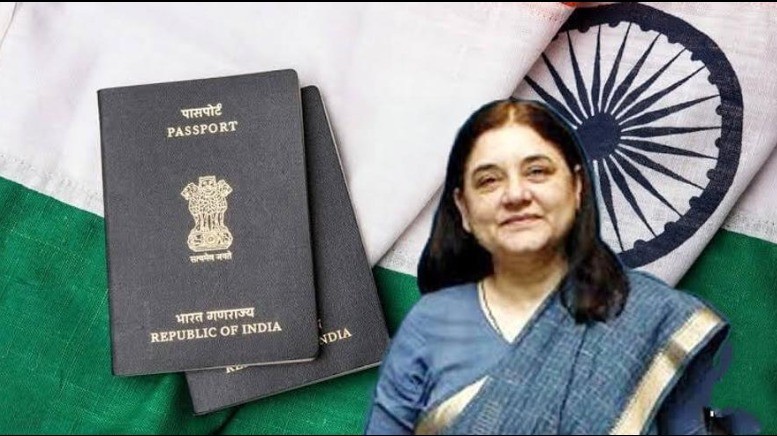
- Maneka Gandhi received an Indian passport under the Passports Act, 1967, on 1 June 1976. On 4 July 1977, the Regional Passport Officer sent her an official letter. The letter directed her to surrender her passport within seven days. It stated that the Government had impounded her passport in the public interest.
- Maneka Gandhi wrote back and asked for the reasons behind this order. Section 10(5) of the Act entitled her to receive such reasons. The Ministry of External Affairs refused to share these reasons with her. It said that disclosure would go against the general public interest.
- Maneka Gandhi then filed a writ petition before the Supreme Court. She invoked Article 32 and challenged the impounding order directly. She argued that the order violated her fundamental rights under Articles 14, 19, and 21. She also argued that Section 10(3)(c) of the Passports Act was itself unconstitutional.
- The government defended its action as one taken for national security reasons. It argued that some administrative decisions cannot always disclose their underlying reasons.
- The Supreme Court admitted the petition and referred it to a larger bench. This decision gave the Court a chance to revisit its own earlier precedents.
Issues Before the Court
- Whether the right to travel abroad fall within the scope of Article 21?
- Whether Article 21 require a procedure that is fair, just, and reasonable?
- Whether the Articles 14, 19, and 21 interconnected, or mutually exclusive?
- Whether Section 10(3)(c) of the Passports Act violate these fundamental rights?
- Whether natural justice apply even to administrative orders like passport impounding?
Arguments from the Petitioner’s Side
- Counsel for Maneka Gandhi argued that personal liberty carries a very wide meaning. They said Article 21 protects far more than mere physical movement. They argued that the right to travel abroad forms part of personal liberty. Counsel argued that any procedure restricting this right must satisfy fairness and reason. They said a mere legislative procedure could not automatically meet this standard.
- Counsel argued that Articles 14, 19, and 21 do not operate in isolation. They said these three articles together form a single protective framework for liberty.
- Counsel argued that the government violated natural justice by denying her a hearing. They said no one should lose a valuable right without any opportunity to respond.
- Counsel argued that Section 10(3)(c) used vague language like public interest. They said such vague criteria gave the executive unchecked and arbitrary power.
- Counsel urged the Court to overrule its narrow reasoning in A.K. Gopalan. They argued that fundamental rights must receive a broad and generous interpretation.
Arguments from the Respondent’s Side
- The Union of India defended the impounding order as a valid administrative decision. It argued that Section 10(3)(c) authorised action in the interest of the public. It argued that disclosing detailed reasons could compromise national security interests.
- The State said Parliament had validly enacted procedure through the Passports Act. It argued that this procedure satisfied the requirement of Article 21. It relied on the earlier ruling in A.K. Gopalan to support a narrow reading.
- The State argued that courts should not read the Articles as interconnected. It said each fundamental right operates within its own separate constitutional field.
- It argued that administrative discretion sometimes needs immediate action without prior notice. It urged the Court to uphold the passport order as constitutionally valid.
Judgment
The Supreme Court held that the right to travel abroad falls under Article 21. It held that Article 21 requires a procedure that is fair, just, and reasonable.
The Court rejected the narrow interpretation given earlier in A.K. Gopalan. It held that Articles 14, 19, and 21 are not mutually exclusive at all. The Court ruled that these three articles overlap and reinforce one another.
It held that natural justice applies to administrative action affecting personal liberty. The Court found the impounding order procedurally unfair, since it denied a hearing. It directed the government to give Maneka Gandhi an opportunity to be heard.
The Court did not strike down Section 10(3)(c) itself as void. It read the provision to require compliance with natural justice principles.
Reasoning of the Court
- Bhagwati, J. wrote the leading judgment for himself and two other judges. He held that personal liberty under Article 21 has the widest possible meaning. He said this right protects far more than mere physical restraint. Further, he held that any procedure affecting this right must never be arbitrary. He said the procedure must be fair, just, and reasonable in substance. Then, he held that Articles 14, 19, and 21 must be read together. He said the golden triangle protects citizens against arbitrary state action. Also, he held that audi alteram partem applies unless expressly excluded by clear necessity. He said post decisional hearings can sometimes satisfy this constitutional requirement.
- Chandrachud, J., Krishna Iyer, J., and Beg, C.J. concurred with this expansive reasoning. They agreed that fundamental rights deserve a broad and purposive interpretation.
- Krishna Iyer, J. added that liberty must never depend on the whim of officials. He said the Constitution favours freedom, and restrictions on it need strong justification. Kailasam, J. dissented and preferred a narrower reading of Article 21. He held that Parliament’s chosen procedure satisfied constitutional requirements adequately. He warned that an overly broad reading could hamper genuine administrative and security concerns.
Significance of the Judgment
- This judgment transformed the meaning of personal liberty under the Indian Constitution. It overruled the narrow and compartmentalised approach adopted in A.K. Gopalan.
- It introduced the doctrine of the golden triangle into Indian constitutional law. It established that state action must always meet the test of reasonableness.
- It expanded Article 21 to include a wide range of unenumerated rights. Later cases used this reasoning to recognise rights like privacy and dignity.
- It strengthened the principles of natural justice within administrative law. Courts began testing every state action against the standard of reasonableness. Legal scholars now treat this case as a turning point for judicial review.
- It also encouraged the judiciary to take a more active and protective role. It remains one of the most cited judgments in Indian constitutional history.
Conclusion
Maneka Gandhi v. Union of India reshaped Indian constitutional jurisprudence permanently. It replaced a rigid and narrow reading of fundamental rights with a flexible one. The judgment placed fairness and reasonableness at the heart of Article 21. It continues to guide courts whenever personal liberty comes under threat today.
Reference
Maneka Gandhi v. Union of India, AIR 1978 SC 597.
A.K. Gopalan v. State of Madras, AIR 1950 SC 27.
