


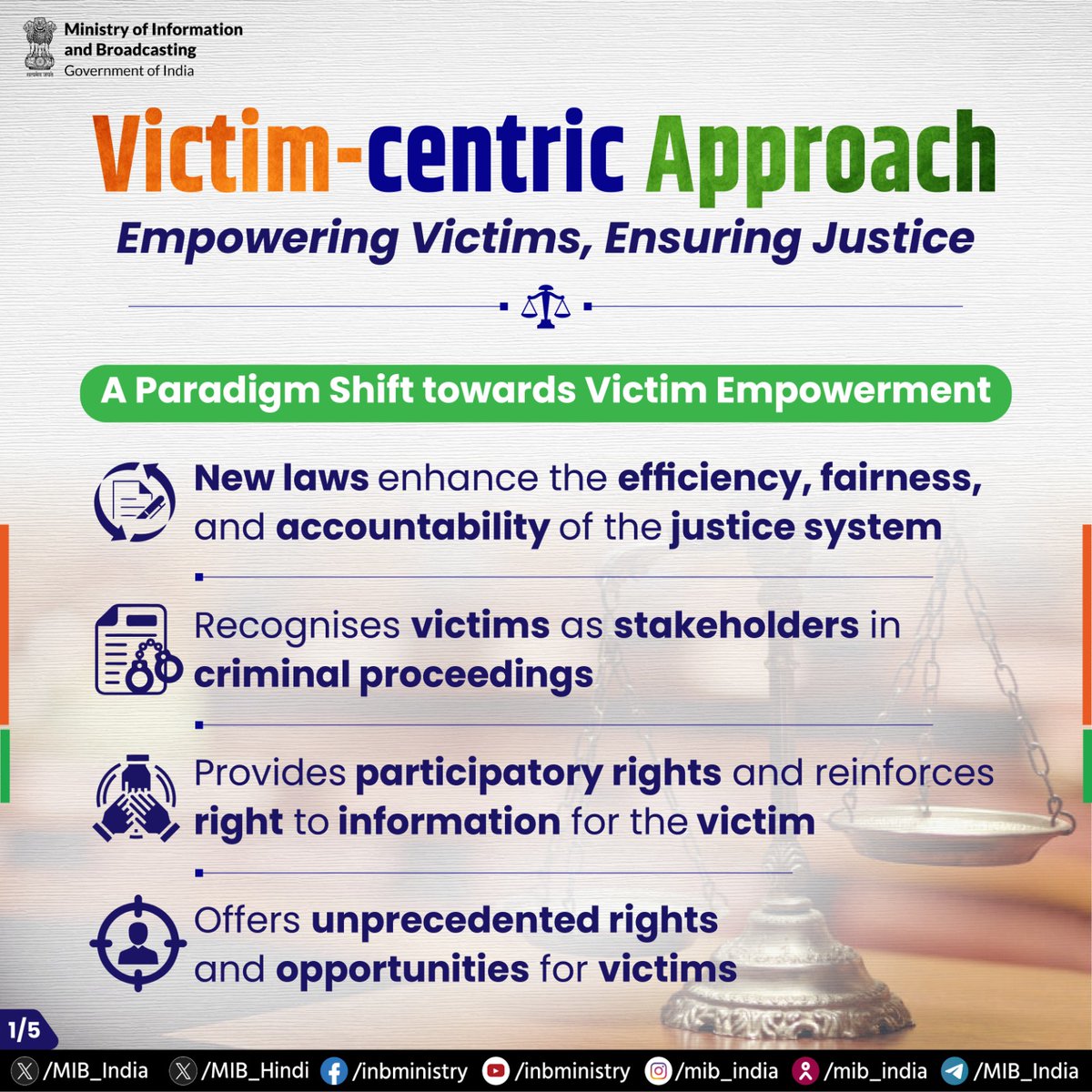
Victim-Centric Approach under the New Criminal Law Regime in India
With emphasis on the latest legal reforms and how they strengthen victim rights
In recent years, India has taken a landmark step in criminal justice reform by replacing old colonial-era statutes with modern, comprehensive codes — the Bharatiya Nyaya Sanhita (BNS) 2023, the Bharatiya Nagarik Suraksha Sanhita (BNSS) 2023, and the Bharatiya Sakshya Adhiniyam (BSA) 2023. These laws came into force from July 1, 2024, signaling a shift toward a more victim-centric, transparent, and technology-driven justice system.
While earlier frameworks (IPC, CrPC, Evidence Act) focused mainly on adjudicating crime and protecting the rights of the accused, the new regime places victims firmly at the center — recognizing them not just as witnesses, but as active participants deserving rights, protection, information, and relief.
What Does “Victim-Centric” Mean Today?
A victim-centric approach means that the law acknowledges the physical, psychological, and socio-economic harm suffered by victims and ensures that the criminal justice system:
-
Recognizes victims as rights-holders, not as mere informants or witnesses.
-
Ensures participation in proceedings at key stages.
-
Provides access to information, protection, and compensation.
-
Uses technology and procedural reforms to reduce trauma.
This approach is reflected across the new criminal law statutes, which mandate more inclusive and efficient processes.
New Laws Reshaping Victim Rights
A. Bharatiya Nyaya Sanhita (BNS), 2023 — New Substantive Law
The BNS replaces the Indian Penal Code (IPC) with updated definitions of offences and sentencing objectives that include victim restitution and compensation. This is a significant conceptual change — punishment is no longer solely about penalizing the offender, but also about restoring and compensating victims.
Key victim-centric features of BNS include:
-
Victim Compensation: BNS provisions explicitly recognize compensation for victims as part of justice delivery, not merely a discretionary add-on. Victims can be compensated for medical costs, loss of income, and psychological trauma.
-
Support Systems: Dedicated support mechanisms — including legal aid, counselling, and psychological assistance — are embedded into the legislative scheme, especially for vulnerable victims.
B. Bharatiya Nagarik Suraksha Sanhita (BNSS), 2023 — New Procedural Law
Replacing the Criminal Procedure Code (CrPC), the BNSS puts victim rights and participation at the heart of every phase of the criminal process.
Important victim-centric provisions include:
i. Right to Appeal Against Acquittal or Lesser Sentence
Victims can directly appeal orders of acquittal, discharge, or inadequate sentencing without waiting for state intervention — a major empowerment of victims in serious cases.
ii. Participation in Bail and Plea Stages
Victims now have a recognized role in bail hearings, plea bargaining, and applications for compounding offences — ensuring their voice is heard before key judicial decisions.
iii. Right to Information
The BNSS significantly expands the victim’s right to information including:
-
FIR registration status
-
Progress of investigation
-
Hearing dates and outcomes
-
Copies of documents (FIR, charge-sheet, statements)
This information must be shared within specified timelines, reducing uncertainty and alienation.
iv. Zero FIR and Digital Reporting
Victims can file a zero FIR at any police station where the complaint is received and online FIRs without visiting a police station — minimizing delay and barriers for reporting crimes.
C. Bharatiya Sakshya Adhiniyam (BSA), 2023 — New Evidence Law
Under the Evidence Act replacement, evidence collection and presentation rules have been modernized to be:
-
More transparent and reliable (e.g., audio-video recordings of key statements relating to sensitive cases).
-
Inclusive of digital records, which ensures that online evidence is admissible and treated on par with physical evidence.
This is especially useful in crimes like cyber-bullying, financial fraud, and online abuse affecting victims.
Procedural Safeguards and Victim Protection
The new laws strengthen protections for victims across the board:
-
Witness Protection Schemes are mandated for government implementation, helping protect victims and witnesses from threats and intimidation.
-
Special technology-enabled procedures (e-summons, digital evidence, remote testimony) reduce the need for repeated travel and courtroom exposure.
-
Sensitive handling of victims of sexual violence, including mandatory recording by female officers where applicable, fosters a more supportive environment.
Speed and Accountability: For Victims’ Benefit
To address long-standing delays, the new regime imposes:
-
Timelines for trial and judgment to ensure defendants and victims both receive timely justice.
-
Mandatory forensic involvement in serious crimes, reducing investigative errors and increasing confidence in outcomes.
Why These Reforms Matter for Victims
The new criminal law regime — by integrating provisions for:
-
compensation
-
protection
-
participation
-
technological facilitation
marks a philosophical break from treating victims as passive bystanders to recognizing them as central stakeholders in justice delivery.
Justice is now not only about punishment of the guilty but also about:
-
restoring dignity to survivors
-
rebuilding their lives
-
ensuring confidence in the justice system
In sum, the laws are designed to make the system more expedient, transparent, and humane.
Conclusion
India’s new criminal justice codes—BNS, BNSS and BSA—represent a transformative shift towards a truly victim-centric legal framework. Victims are now accorded rights, protections, remedies, and dignified treatment as integral to the justice process.
However, realizing this vision depends on effective implementation, widespread awareness of rights by victims, and training of law enforcement and judiciary in victim sensitivity and digital procedures.
This reform aims to build a system where justice is not only punitive but also restorative, protective, and inclusive, ensuring that the voice of the victim resonates at every stage of the legal process.
