


ABSTRACT:
Human–wildlife conflict has emerged as a pressing socio-legal challenge in India, particularly affecting forest-dependent communities, small farmers, migrant laborers, and indigenous populations. Rapid urbanization, climate change, deforestation, and habitat fragmentation have intensified encounters between humans and wildlife, resulting in loss of life, livelihood, and property. Traditionally, the legal response to such conflicts has been limited to ex gratia compensation and administrative remedies, often inaccessible to the most vulnerable groups. Recently, initiatives such as the National Legal Services Authority (NALSA) and Kerala State Legal Services Authority (KeLSA) intervention in Kerala signal a paradigm shift—recognizing human–wildlife conflict as an issue of access to justice, environmental justice, and constitutional rights. This article examines the role of legal aid in addressing human–wildlife conflict in India, analyzing constitutional foundations, statutory frameworks, judicial trends, and the emerging ecocentric jurisprudence. It argues that legal aid mechanisms can serve as a transformative tool to balance wildlife conservation with human dignity, livelihood, and social justice.
INTRODUCTION:
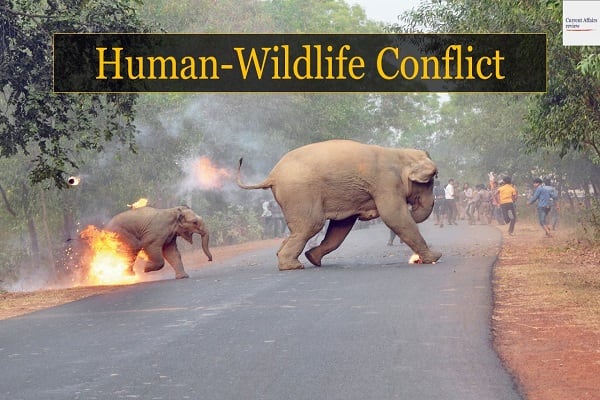
India hosts nearly eight percent of the world’s biodiversity while supporting over seventeen percent of the global human population. This demographic and ecological reality has made human–wildlife conflict inevitable. Incidents involving elephants, tigers, leopards, wild boars, and monkeys have increased dramatically over the past decade, particularly in states such as Kerala, Assam, Odisha, Chhattisgarh, and Uttarakhand. These encounters often result in death, grievous injury, destruction of crops and homes, and long-term psychological trauma.
Despite the severity of harm, affected individuals primarily tribal communities, marginal farmers, and forest dwellers frequently lack access to legal remedies. Compensation schemes are plagued by bureaucratic delays, lack of awareness, and discretionary decision-making. Against this backdrop, the recent initiative by NALSA and KeLSA to provide structured legal aid, insurance assistance, psychological care, and rehabilitation to victims of human–wildlife conflict represents a significant shift in legal thinking. It reframes the issue from one of administrative benevolence to one of enforceable rights and environmental justice.
This article explores whether legal aid can effectively bridge the gap between conservation imperatives and human rights, situating human–wildlife conflict within India’s constitutional, statutory, and jurisprudential framework.
I. HUMAN–WILDLIFE CONFLICT: CAUSES AND LEGAL CONTEXT
Human–wildlife conflict is not merely a consequence of animal behavior but a structural outcome of developmental policies. Large scale deforestation, mining, linear infrastructure projects, and climate induced habitat changes have pushed wildlife into human settlements. The Forest Rights Act, 2006 (FRA), while recognizing the rights of forest-dwelling communities, has also altered forest usage patterns, sometimes without corresponding conservation planning.
Legally, wildlife protection in India is governed primarily by the Wildlife (Protection) Act, 1972, which adopts a preservationist approach focused on species protection. Human costs are addressed indirectly through state compensation schemes rather than enforceable legal rights. This asymmetry has resulted in what scholars describe as “conservation without compassion,” where wildlife interests are prioritized without adequate safeguards for human life and livelihood.
II. CONSTITUTIONAL DIMENSIONS OF HUMAN–WILDLIFE CONFLICT:
1. Article 21: Right to Life, Livelihood, and Dignity:
Article 21 of the Constitution guarantees the right to life and personal liberty, expansively interpreted to include livelihood, safety, and human dignity. In Olga Tellis v. Bombay Municipal Corporation, the Supreme Court recognized livelihood as an integral component of the right to life. When wildlife destroys crops or causes fatalities, it directly threatens the subsistence and dignity of affected communities.
The State’s failure to prevent foreseeable harm or provide timely remedies may amount to a violation of Article 21. Legal aid interventions thus become constitutionally significant, enabling individuals to assert their fundamental rights against systemic neglect.
2. Article 14: Equality and Non-Arbitrariness:
Human–wildlife conflict disproportionately affects marginalized populations tribal communities, small farmers, and migrants raising concerns under Article 14. Compensation schemes often operate arbitrarily, with unequal valuation of human life, injury, and property loss. Legal aid mechanisms can introduce procedural fairness, transparency, and accountability, aligning state action with the equality mandate.
3. Directive Principles and Fundamental Duties:
Article 48A obligates the State to protect wildlife and the environment, while Article 51A(g) imposes a duty on citizens to safeguard nature. However, these provisions must be harmonized with fundamental rights. The Constitution does not envision environmental protection at the cost of human suffering; rather, it mandates a balance between ecological preservation and social justice.
III. ECOCENTRIC JURISPRUDENCE AND ITS LIMITS:
Indian courts have increasingly adopted an ecocentric approach, recognizing the intrinsic value of nature independent of human use. In Centre for Environmental Law, WWF v. Union of India, the Supreme Court emphasized species preservation, while in Animal Welfare Board of India v. A. Nagaraja, it recognized animal dignity.
However, ecocentrism has its limits. In State of Gujarat v. Mirzapur Moti Kureshi Kassab Jamat, the Court cautioned against ignoring human welfare in environmental decision-making. Legal aid initiatives play a crucial role in operationalizing this balance by ensuring that conservation policies do not invisibilize human suffering.
IV. STATUTORY FRAMEWORK AND THE ROLE OF LEGAL AID:
- Wildlife (Protection) Act, 1972:
The Act prioritizes wildlife conservation but provides limited remedies for victims of wildlife attacks. Compensation is largely policy-driven rather than statutorily guaranteed. Legal aid can assist victims in navigating administrative processes, filing writ petitions, and seeking judicial oversight.
- Forest Rights Act, 2006:
The FRA recognizes community forest rights and habitation rights of forest dwellers. Legal aid is essential for enforcing these rights, particularly where conservation measures result in displacement or loss of livelihood without due process.
- Legal Services Authorities Act, 1987:
The Legal Services Authorities Act institutionalizes access to justice for marginalized groups. NALSA and State Legal Services Authorities are empowered to provide legal representation, legal awareness, and alternative dispute resolution. Extending these services to human–wildlife conflict victims reflects a rights-based approach to environmental governance.
V. THE KERALA NALSA–KeLSA INITIATIVE: A CASE STUDY
Kerala’s initiative represents an innovative legal-social response to environmental conflict. By offering legal aid, insurance facilitation, psychological counseling, and rehabilitation, the program acknowledges the multifaceted nature of harm caused by wildlife encounters. Importantly, it targets communities traditionally excluded from legal systems, including tribal groups and migrant laborers.
This initiative operationalizes environmental justice by integrating legal assistance with social welfare. It also aligns with constitutional values by treating human–wildlife conflict as a matter of dignity and access to justice rather than administrative discretion.
VI. EVALUATING EFFECTIVENESS AND SCALABILITY:
While promising, the initiative faces challenges. Limited funding, lack of trained personnel, and jurisdictional overlaps between forest departments and legal services authorities may hinder implementation. Additionally, without a national framework, such initiatives risk remaining localized experiments.
However, the model is scalable. States experiencing severe human–wildlife conflict can adapt the Kerala framework, supported by central guidelines from NALSA. Integrating legal aid with environmental impact assessments and disaster management frameworks could further institutionalize the approach.
VII. INTERSECTION OF ENVIRONMENTAL AND SOCIAL JUSTICE:
Human–wildlife conflict exemplifies environmental injustice, where the costs of conservation are borne by those least responsible for ecological degradation. Legal aid serves as a corrective mechanism, enabling marginalized communities to assert their rights and participate meaningfully in environmental governance.
Internationally, principles of environmental justice emphasize equitable distribution of environmental benefits and burdens. India’s constitutional framework, read with international commitments under sustainable development norms, supports a similar approach.
CONCLUSION:
Human–wildlife conflict in India is no longer merely an environmental or administrative issue it is a constitutional and justice-oriented concern. As conservation efforts intensify, the human costs of ecological protection cannot be ignored. Legal aid emerges as a critical bridge between environmental governance and social justice, ensuring that constitutional guarantees of life, dignity, and equality are not sacrificed at the altar of conservation.
The NALSA–KeLSA initiative marks a significant shift toward rights-based environmental governance, recognizing that access to justice is integral to sustainable development. However, for such initiatives to achieve lasting impact, they must be supported by statutory reform, judicial sensitivity, and administrative coordination. A national framework integrating legal aid into human–wildlife conflict management is the need of the hour.
Ultimately, the legitimacy of India’s environmental jurisprudence depends on its ability to protect both nature and those who live closest to it. Legal aid, when effectively deployed, can ensure that conservation and compassion coexist transforming conflict into constitutional harmony.
REFERENCES:
- M.C. Mehta v. Union of India, (1987) 1 SCC 395.
- T.N. Godavarman Thirumulpad v. Union of India, (1997) 2 SCC 267.
- Centre for Environmental Law, WWF v. Union of India, (2013) 8 SCC 234.
- Animal Welfare Board of India v. A. Nagaraja, (2014) 7 SCC 547.
- Wildlife (Protection) Act, 1972.
- Forest Rights Act, 2006.
- Legal Services Authorities Act, 1987.
