


Introduction
Artificial Intelligence (AI) has rapidly transitioned from a futuristic abstraction to a ubiquitous presence in our daily routines. Whether seeking answers, generating ideas, or navigating digital tasks, AI now functions as a companion for millions worldwide.
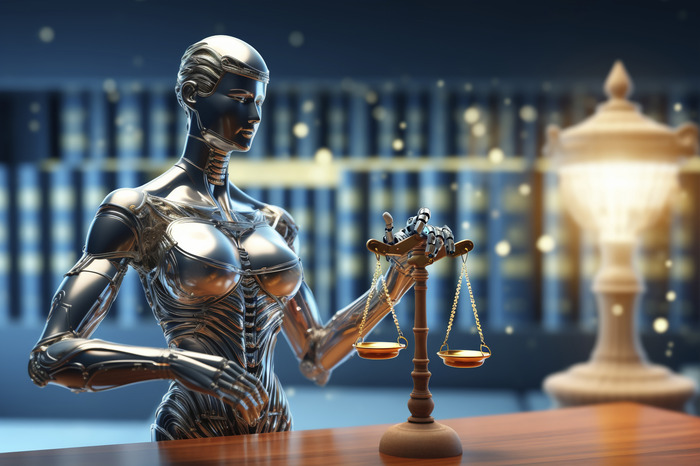
Yet, its growing influence raises pressing questions—particularly in fields built on human reasoning, emotional intelligence, and ethical judgment, such as law.
This explores the multifaceted implications of AI’s integration into legal and societal domains. While AI offers convenience, efficiency, and decision-support capabilities, it also presents risks—overdependence, reduced interpersonal engagement, data privacy breaches, and threats to creative and professional labour.
From the courtroom to digital art, and from child safety concerns to international regulatory debates, the discussion around AI touches every corner of modern life.
As examines whether AI can ever replace lawyers, understand its limits in replicating emotional nuance, and assess its impact on employment and privacy, this paper calls for a balanced perspective—one that acknowledges both the promise and the peril of technological advancement.
AI and Its Dual Nature
Artificial intelligence (AI) is not only the futuristic concept it became at home with it, as for small things we go to the chatgpt and take assistance from that. It has had the pros and cons of these but every coin has two side can be useful for many things such has for guidance for any information we can take help from the AI.
The disadvantages are that the peoples get lethargic, not do their work by their own. Take help is a good thing but copying that is cheating, as because of this people get conservative as they are feeling lonely however they take help from that friend boots, somehow, they get depended on that.
If there is a law for the AI, in which ambit the AI is used or they have the restriction on that AI, consultation is good or not? AI is related to law, or no AI is dangerous for kids? AI is boon or bane for future?
Human Dependence and Emotional Disconnect
People are becoming more reserved, preferring AI over human interaction due to its mood-sensitive responses and nonjudgmental agreement. Unlike friends who offer varied opinions, AI aligns with users, fostering comfort but also dependency.
Though AI lacks emotions, its problem-solving and decision-making—often superior to humans per Jarrahi (2018)—make it appealing. This shift raises questions about emotional connection, authenticity, and the future of human relationships.
Jarrahi, M. H. (2018). Artificial intelligence and the future of work: Human-AI symbiosis in organizational decision making. Business Horizons, 61(4), 577–586.
https://doi.org/10.1016/j.bushor.2018.03.007
This are the subjective matter that who is correct between AI and human; as human can feel emotions but the AI does not have the human emotions that they feel happiness, love, angry etc. But there problem-solving method is good than the human, as the human started comfortable in talking with the AI than human.
AI’s Theoretical Strength vs Human Experience
AI offers instant, subject-based information, making it highly convenient. However, humans provide lived experiences and emotional insights that AI lacks.
While AI excels in theory and guidance, real-life application—especially in law—requires navigating practical complexities that theory alone can’t capture. This marks a key divide between AI’s conceptual clarity and human experiential depth.
AI research is booming: More than 120,000 peer-reviewed AI papers were published in 2019. The report also notes that between 2000 and 2019, AI papers went from being 0.8 percent of all peer-reviewed papers to 3.8 percent in 2019, as by these report the AI is growing day by day.
AI, Creativity, and Ethical Dilemmas
AI-generated Ghibli-style art, while innovative and convenient, presents a troubling ethical dilemma.
The original Ghibli aesthetic, crafted by Hayao Miyazaki and his team through years of meticulous hand-drawn animation, reflects deep emotional labor and artistic integrity. AI tools now replicate this style instantly, often without credit or consent, undermining the value of human creativity and threatening the livelihoods of traditional artists.
This shift not only dilutes the cultural significance of the art but also raises concerns about data privacy—once personal images are uploaded to AI platforms, users lose control over how those images are used, potentially contributing to unauthorized model training.
The situation highlights a broader tension between technological efficiency and respect for artistic heritage, calling for thoughtful regulation and ethical boundaries in AI development.
For instance, they could be used to generate content that may be defaming or used as harassment. “Ghibli Art: Fun Trend Or Privacy Nightmare? Experts Warn Of Risks Involved” edited by Nikhil Pandey.
In my view, there should be the law for this. Firstly, there are harm to the art creator and secondly there are harm to the privacy of an individual. Everyone get their right to privacy against the AI because someone personal information that they are sharing with the AI is not get infringed and everyone who work as a Art also get their rights because of AI development must balance innovation with protection of privacy and employment.
AI in the Legal Field
In law, AI aids research and evidence analysis, but human judgment remains vital.
For example, Indian courts use AI-driven facial recognition, yet judges still assess credibility, intent, and fairness under the Evidence Act. This shows AI can’t replace emotional intelligence or ethical reasoning.
Globally, the EU’s AI Act enforces strict rules on high-risk systems, ensuring rights and safety—a contrast to slower regulatory progress elsewhere.
Together, these examples highlight that while AI enhances efficiency, justice still depends on human insight.
The Human Touch in a Courtroom: AI Evidence, Admissibility and Judicial Discretion in India (June 21, 2025)
Conclusion
AI is a powerful tool, but it can’t replace human depth.
In law, art, and emotion, lived experience matters. AI helps with tasks, yet lacks ethical judgment, empathy, and creativity.
As it grows, we must protect privacy, jobs, and human connection. Regulation and ethical use can make AI a collaborator—not a threat.
Progress must honour humanity.
Also Read:
Rights of undertrial prisoners in India
How To Send A Legal Notice In India
