


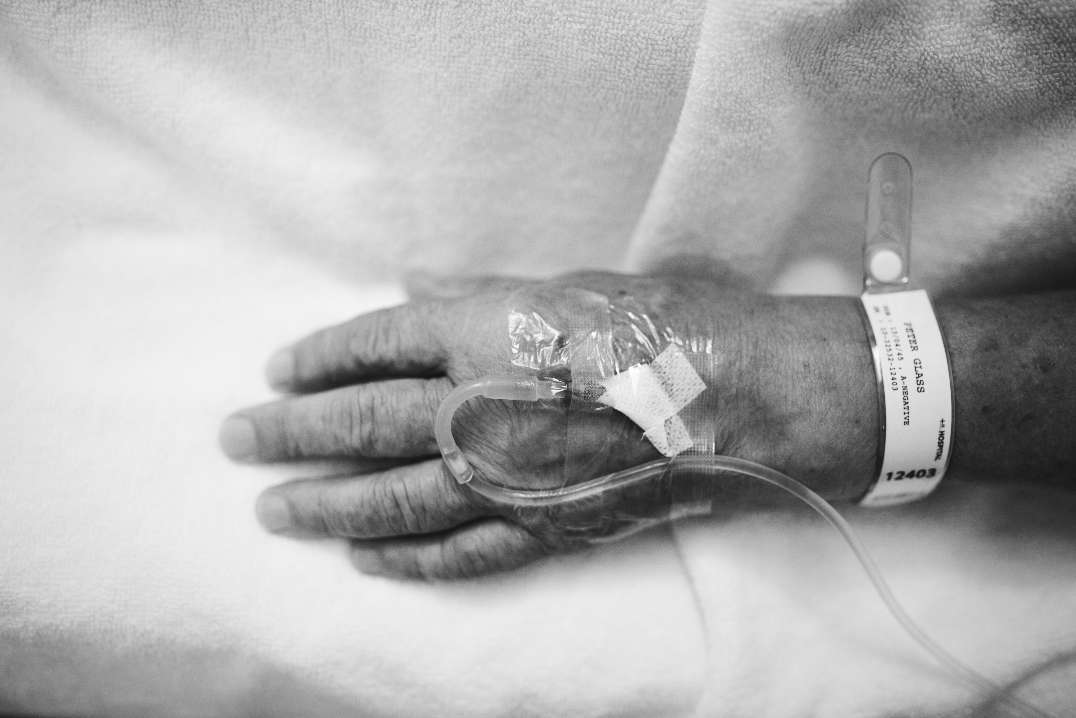
Harish Rana’s Verdict brought some
tough questions for the Hon’ble Supreme Court: can a patient’s nutrition and
hydration delivered through a feeding tube be withdrawn as medical treatment
when he is unable to communicate his will?
The court answered this in a landmark
verdict in Harish Rana v.
Union of India in March
2026, INSC 222. A Bench of Justices J.B. Pardiwala and K.V. Viswanathan
permitted withdrawing clinically assisted nutrition and hydration under a
medically supervised palliative-care plan. Applying the test outlined in Common Cause v. Union of India,
the Court considered both the medical character of the intervention and whether
its continuation served the interests of a patient.
The ruling elucidates the legal Stance.
It also raises a practical question: can another family facing a comparable
situation get a timely, carefully considered decision without resorting to the
Supreme Court?
Parliament need to build a
process that is open to them and not biased, so that disability does not
influence what is in his interest.
The circumstances of the case
In 2013, Harish Rana, A college student at that time,
suffered a serious brain injury after falling from the fourth floor of his
place. He was left quadriplegic and depended on clinically assisted nutrition
and hydration (CANH), provided through a feeding tube.
Over the following years, medical assessments recorded that
he was unaware of his surroundings and showed no substantial interaction. His
elderly parents continued to care for him.
From the High Court to the Supreme Court
The patient’s family approached the Delhi High Court seeking
the constitution of a medical board to consider ending life-sustaining
treatment. The High Court dismissed the petition in 2024, reasoning that he was
not being kept alive mechanically and that his circumstances did not justify the
relief sought.
Months later, the petition reached the Supreme Court; its
initial response was to explore arrangements for his care. In August 2024, it
asked the Union government to consider the available options. In the 2
week of November, the Court disposed of
the petition after recording an arrangement for home-based care with assistance
from the Uttar Pradesh government, including nursing support, medical visits,
medicines and consumables. Admission to the district hospital in Noida was an
alternative if home care was not feasible. His parents agreed to the arrangement,
with liberty to approach the Court again if necessary.
The family later approached the Court with a miscellaneous
application. On 26 November 2025, Justices Pardiwala and Viswanathan ordered
the constitution of a primary medical board under the Common Cause case
principle. Its assessment found that the chances of recovery were negligible.
On 11 December, the Court instructed AIIMS, New Delhi, to constitute a
secondary medical board for a further examination. That assessment also found
irreversible brain damage and minimal chances of recovery.
How the law reached this point
In Gian Kaur v. State of Punjab (1996), the Supreme
Court held that Article 21 does not include a general right to die, while
distinguishing it from dignity involved in the natural process of dying. The
Law Commission’s 196th and 241st Reports recommended statutory safeguards for
withholding or withdrawing life-sustaining treatment.
In Aruna Ramachandra Shanbaug v. Union of India
(2011), the Court acknowledged that withdrawing life support is allowed in
specified circumstances, subject to High Court approval, but declined relief on
the facts.
In Common Cause v.
Union of India (2018), a Constitution Bench recognised the right to die with
dignity under Article 21, gave legal recognition to advance medical directives
and prescribed procedural safeguards. Those procedures were simplified in 2023.
Active euthanasia remains prohibited. The withholding or
withdrawal of life-sustaining treatment, however, is permissible subject to the
applicable safeguards—the framework within which Harish Rana was
decided.
Starvation or treatment? The question of CANH
Everything in the case turned on a single classification. If
a feeding tube is basic care, switching it off is neglect. In the case of medical
treatment, a patient or his surrogate can lawfully refuse it, and doctors can
lawfully stop it. The Delhi High Court had taken the first view. The Supreme
Court took the second.
To reach that conclusion, the Bench examined how courts in
the United States, New Zealand and the United Kingdom had dealt with the same
problem.
It leaned on In re Conroy, which separates tube
feeding from the ordinary act of feeding a person by hand or bottle. A person
who is spoon-fed receives assistance to perform a task their body is still
capable of doing. A person on CANH has had a vital bodily
function taken over by a machine.
An obvious counter-argument is that families often manage
CANH at home without a physician. For years Rana’s own parents did exactly that
for years. The Court did not think this mattered. Where the procedure is
carried out does not change what it is, and what it does is a medical job:
keeping a patient alive who could not otherwise live.
The Court then inquired about what the treatment was
actually achieving. For a man with no cognition, no awareness of the people
around him and no realistic chance of neurological recovery, the answer was
very little. The body continued to function, but the patient received nothing
from it. Once CANH was treated as medical treatment, its withdrawal could be
examined under the Common Cause framework, and was no longer a matter of
abandonment.
Whose best interests, and measured how?
Where a patient cannot communicate, Common Cause says the
decision must rest on his best interests. Chief Justice Dipak Misra went a step
further in 2018 and held that this standard prevails over the State’s own
interest in preserving life.
What the phrase means in practice is less clear, and the
Bench stated this openly. It declined to lay down a formula. The assessment has
to cover medical facts along with the patient’s values, beliefs and feelings,
and whatever he would have considered if he had the ability to choose.
The Court also changed the way the question is put. It didn’t
inquire if death was preferable for Rana. It asked whether it was in his
interest to have his life prolonged by artificial means. Put that way, the
evidence pointed one direction. His brain injury was permanent, he exhibited no
awareness, and the nutrition keeping him alive was doing nothing to improve his
condition. His parents, after thirteen years of continuous care, said that
carrying on would merely prolong his suffering.
What happens after treatment stops
The Court did not treat withdrawal to signify the conclusion
of the doctor’s role. It said the right to die with dignity cannot be separated
from the right to proper palliative and end-of-life care, and that CANH must be
reduced in stages under a written, supervised plan. Rana was sent to the
palliative care department at AIIMS, and the usual thirty-day period for
reconsideration was set aside.
The order also looks beyond this one patient. States have to
create panels of registered medical practitioners from which medical boards can
be drawn. High Courts have to direct Judicial Magistrates of First Class to
receive intimation from hospitals when a board is unanimous about withdrawing
or withholding treatment. Without these, a right on paper would stay out of
reach for most families.
Justice Pardiwala ended his opinion in unusually personal
terms. He described the decision as an act of compassion and courage, not
surrender, and told the parents they were not abandoning on their son. They
were letting him go with dignity.
Still waiting for Parliament’s words
All of this rests on guidelines framed by judges, and not on
a statute. The Court first asked Parliament to legislate in 2018, and the Law
Commission had recommended it as far back as 2006. Rana’s family needed years
and a hearing at the highest court to get a result. A right that is available
only to those who can afford to litigate is a limited one. It needs a statute,
with fixed procedures and trained officials to carry them out.
In my considered opinion, this judgment raises a broader
question concerning the relationship between judicial discretion and the need
for clear statutory guidelines. Every case comes with its own facts, medical
circumstances, and individual considerations, and the judiciary is entrusted
with the responsibility of examining these complexities and delivering justice
accordingly. For eight years, judge-made guidelines have governed this area,
and the Court has described them as a stopgap until Parliament acts. A statute
need not take discretion away from judges or medical boards. It should settle
the points that Harish Rana left to individual benches. Three provisions
matter most.
First, a method for finding the patient’s wishes. Common
Cause works best when a patient has an advance directive, but most patients
never make one. The law should say what counts as evidence of a patient’s
values (earlier statements to family, religious and personal beliefs, how the
person lived), who may give that evidence, and how conflicting accounts are
weighed. Without this, best interests depend on who argues most persuasively.
Second, an express bar on disability and cost as grounds
for withdrawal. The statute should state that neither disability nor the
financial and caregiving burden on the family can, on its own, justify
withdrawing treatment, and it should require boards to record their reasons for
prognosis and benefit. Rana’s parents cared for him for thirteen years; the law
must ensure that the next family’s exhaustion is never mistaken for the
patient’s interest. That protection means little without funded home care and
palliative support, so that withdrawal is not the only option left to families.
Third, an independent, time-bound process. Standing
panels of registered practitioners in each district, at least one member
unconnected to the treating hospital, a fixed period for boards to decide, a
right for family members to challenge a decision, and periodic review in
long-term cases would turn the Court’s directions into something families can
actually use. Parliament has the competence to legislate on this under Entry 26
of the Concurrent List, and the Health Ministry’s 2016 draft bill, never
introduced, gives a starting text.
Conclusion
The judgment settles that CANH is a form of medical
treatment, gives the best interests test more content, and treats palliative
care as part of the right and not an extra. It is also the first time the Common
Cause process has been followed to the end. The task now is to see that
future law protects the autonomy of people who cannot speak for themselves and does not end up ranking some lives as more worth continuing than others.
