


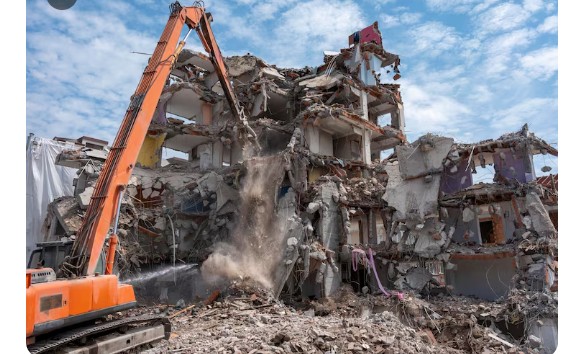
In Re: Directions in the Matter of Demolition of Structures: Due Process and the Limits of Executive Power
Introduction
In a constitutional democracy, the government has the power to maintain law and order, regulate buildings and remove illegal constructions. However, this power cannot be exercised arbitrarily. Every action of the State must remain within the boundaries of law and constitutional rights. This principle became particularly important in In Re: Directions in the Matter of Demolition of Structures, decided by the Supreme Court of India on 13 November 2024.
The case arose against the background of demolitions carried out by public authorities against the properties of persons accused of criminal offences. The practice attracted considerable public attention because, in several situations, houses or commercial structures were demolished soon after a person was accused of a crime. The central concern before the Supreme Court was whether the executive could effectively punish an accused person by demolishing his or her property without following the procedure established by law.
The Supreme Court, through a Bench comprising Justice B.R. Gavai and Justice K.V. Viswanathan, emphasised that the executive cannot become a judge and impose punishment merely because an individual has been accused of an offence. The judgment therefore became an important discussion on the rule of law, separation of powers, natural justice, presumption of innocence, right to shelter and protection against arbitrary State action.
Background of the Case
The proceedings before the Supreme Court involved petitions raising concerns about the demolition of residential and commercial properties by State authorities. The petitioners alleged that in some instances properties were demolished because their owners or occupants had been accused of criminal offences, without adequate adherence to the applicable legal procedure.
The issue was not simply whether an illegal structure could ever be demolished. Governments and municipal authorities have legal powers to deal with unauthorised construction. The real constitutional concern was how and why the power of demolition was being exercised.
A person being accused of a crime does not automatically mean that the person is guilty. Criminal guilt has to be determined through the judicial process. Therefore, if an executive authority demolishes a person’s house merely because that person has been accused of a crime, the demolition can operate like a punishment even though no court has imposed such punishment.
This raised a fundamental question: Can the executive punish a person before the judicial process has established guilt?
The Supreme Court answered this question by placing the rule of law at the centre of its reasoning.
Issues Before the Supreme Court
The major issues considered by the Court included:
- Whether the property of an accused or convicted person can be demolished merely because of his involvement in a criminal case.
- Whether demolition without following due process violates constitutional principles.
- Whether the executive can effectively impose punishment without a judicial determination.
- Whether such action violates the principles of natural justice and the presumption of innocence.
- Whether the right to shelter under Article 21 is affected by arbitrary demolition.
- What safeguards should be followed by authorities before carrying out demolitions.
These questions required the Court to balance two legitimate interests: the authority of the State to regulate construction and the constitutional rights of individuals.
Rule of Law and Separation of Powers
One of the most important aspects of the judgment is its emphasis on the rule of law.
The rule of law means that government authorities are also subject to law. Public officials cannot act according to personal preferences or political considerations. Even when the State is dealing with an accused person, it must follow the procedure prescribed by law.
The Supreme Court observed that if the executive demolishes a house simply because its occupant is accused of a crime, it effectively assumes the role of both the prosecutor and the judge. This creates a serious constitutional problem because punishment for a crime must follow the legal and judicial process.
This is closely connected with the separation of powers. The executive administers the law, while courts determine criminal guilt and impose criminal punishment. The executive cannot bypass the courts and create its own punishment.
The judgment therefore makes an important distinction: lawful demolition of an illegal structure and demolition as punishment for an alleged crime are not the same thing.
Presumption of Innocence and Natural Justice
Another significant principle discussed by the Court is the presumption of innocence.
In criminal law, an accused person is presumed innocent until proved guilty according to law. Merely filing an FIR, making an arrest or accusing someone of an offence does not establish guilt.
If the State demolishes the accused person’s house immediately after an accusation, the practical effect can be punitive even before the criminal case is decided. This is inconsistent with the basic structure of a fair criminal justice system.
The judgment also reinforces the principle of natural justice. Before an adverse administrative action is taken, affected persons should ordinarily receive an opportunity to understand the allegations, respond to them and challenge the proposed action where the law provides such a right.
A demolition can have permanent and devastating consequences. Once a house is destroyed, simply giving a person a hearing afterwards may not provide an adequate remedy. Therefore, procedural safeguards before demolition become particularly important.
Right to Shelter under Article 21
The judgment also examined the importance of shelter under Article 21 of the Constitution, which protects life and personal liberty.
The right to shelter has been recognised as an important component of the broader right to live with dignity. A home is not merely a physical structure. For many people, it represents security, family life and economic stability.
The Court therefore treated arbitrary demolition as something that can have consequences extending beyond the loss of bricks and walls. When a family loses its home, innocent family members may also suffer even though they have no connection with the alleged offence.
This aspect makes the issue particularly sensitive. The State may have a legitimate interest in enforcing building laws, but enforcement should not become an instrument for imposing punishment unrelated to the actual legal violation.
Collective Punishment and Innocent Family Members
A particularly important concern identified by the Supreme Court was the possibility of collective punishment.
Suppose one member of a family is accused of a criminal offence, while the house belongs to or is occupied by several family members. Demolishing the entire house can affect parents, spouses, children and other occupants who may have nothing to do with the alleged offence.
Criminal responsibility is generally personal. A person should not suffer punishment simply because he or she happens to be related to an accused person.
The Supreme Court therefore stressed that executive action must be based on legal grounds relating to the property itself rather than using demolition as a method of punishing a person for an alleged criminal offence.
The Supreme Court’s Directions
One of the most important contributions of the judgment was the formulation of procedural safeguards for demolition.
The Court laid down directions intended to ensure transparency and accountability in demolition proceedings. These include requirements relating to prior notice, opportunity of hearing, reasoned orders, time for challenging the decision and proper documentation of the demolition process.
The authorities were required to follow a structured procedure rather than immediately resorting to demolition.
The Court also directed that demolition proceedings should be properly documented, including through video recording, and that relevant reports should be placed before the appropriate municipal authorities and made available through digital mechanisms.
Importantly, the directions also provide for accountability of officials who violate the safeguards. The Court indicated that violation could attract contempt proceedings and that responsible officials could face personal consequences, including liability relating to restitution and damages in appropriate circumstances.
These requirements demonstrate that the judgment is not simply about stopping demolitions. Rather, it attempts to establish a lawful procedure for exercising demolition powers.
Exceptions Recognised by the Court
The judgment does not mean that every demolition by a public authority is prohibited.
Authorities continue to possess legal powers to remove structures that are genuinely unauthorised, dangerous or otherwise liable to demolition under the applicable law. The Supreme Court’s concern is with arbitrary action and demolition without following the legally required procedure.
The directions also do not apply in the same manner to certain categories, including structures situated on public places such as roads and footpaths, and demolitions carried out pursuant to judicial orders.
Thus, the judgment should not be understood as granting immunity to illegal construction. Instead, it establishes that even an illegal structure must be dealt with through lawful procedure.
Constitutional Significance of the Judgment
The judgment has wider constitutional importance because it reinforces the idea that government power must have legal limits.
Article 14 protects individuals against arbitrary State action. Article 21 protects life and personal liberty and has been interpreted to include several aspects of dignified existence. Article 32 provides a constitutional remedy before the Supreme Court for enforcement of fundamental rights.
When these principles are considered together, the judgment presents due process not as a technical formality but as a meaningful constitutional protection.
The judgment also strengthens the concept of public accountability. Government officials exercise public power on behalf of the State. Such power must therefore be exercised honestly, reasonably and according to law.
The Supreme Court’s reasoning is particularly significant because administrative decisions can have immediate and irreversible consequences. A house can be demolished within hours, while a legal challenge may take considerably longer. Procedural safeguards therefore help prevent irreversible harm caused by an arbitrary decision.
Critical Analysis
The judgment is important because it attempts to maintain a balance between effective law enforcement and individual constitutional rights.
One possible concern is that strict procedural requirements could sometimes slow down action against genuinely illegal structures. However, the existence of procedural safeguards does not eliminate the State’s power to take lawful action. It simply requires authorities to demonstrate that their action is based on a legitimate legal ground.
Another important point is that the judgment does not prevent criminal investigation or prosecution. If someone is accused of an offence, the police and prosecution can proceed according to criminal law. What the judgment prevents is the conversion of demolition power into an informal punishment.
In practical terms, this distinction is extremely important. A person may ultimately be convicted in a criminal case, but the punishment must still be one authorised by law and imposed through the competent legal process.
The judgment therefore reinforces a basic democratic principle: the State may be powerful, but its power is not unlimited.
Impact on Governance and Citizens
The decision also has practical significance for ordinary citizens. Demolition proceedings can involve property, savings, family security and livelihood. The safeguards introduced by the Court provide citizens with greater procedural protection against sudden administrative action.
For public authorities, the judgment creates a greater responsibility to maintain proper records, issue notices, conduct hearings where required and pass reasoned orders. It also makes officials more conscious of personal accountability when exercising coercive powers.
The judgment consequently changes the focus from merely asking “Can the government demolish this structure?” to asking “Under what law, for what reason and after following what procedure can the government demolish it?”
That change in approach is at the heart of constitutional governance.
Conclusion
In Re: Directions in the Matter of Demolition of Structures (2024) is an important Supreme Court judgment concerning the relationship between executive power and constitutional rights. The Court made it clear that being accused of a crime cannot, by itself, become a ground for the executive to demolish a person’s home or property without following due process.
The judgment reinforces the rule of law, separation of powers, natural justice, presumption of innocence, right to shelter and public accountability. At the same time, it recognises that authorities can take action against unlawful construction when they act within the law.
Ultimately, the case reminds us that justice cannot be achieved simply by acting quickly or forcefully. In a constitutional democracy, the procedure through which State power is exercised matters as much as the objective behind that power. A bulldozer may be capable of bringing down a building within minutes, but the Constitution requires the State to first establish that the demolition is legally justified.
For law students, the judgment is therefore more than a case about demolitions. It is a practical illustration of how constitutional principles operate when individual rights come face-to-face with governmental power.
